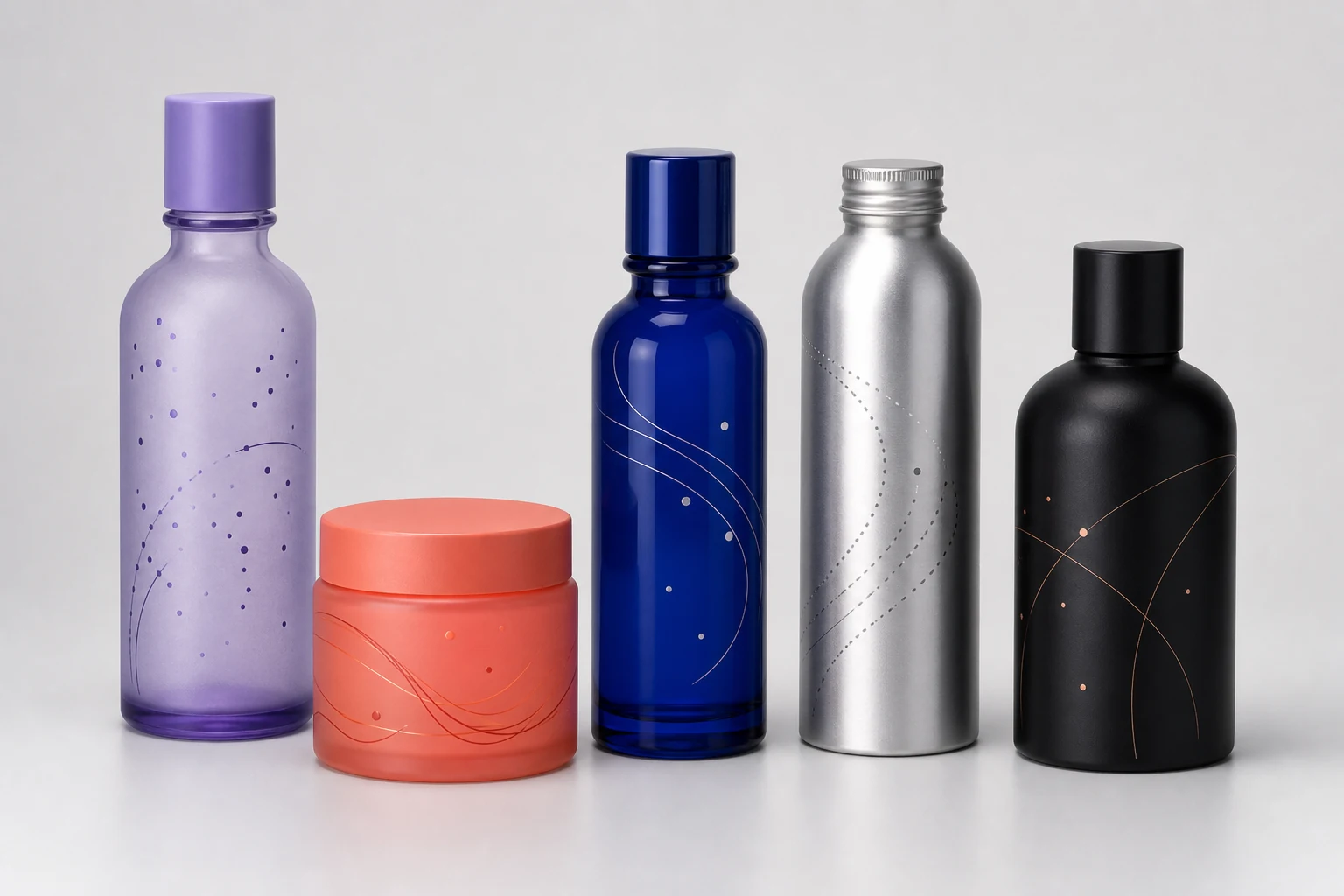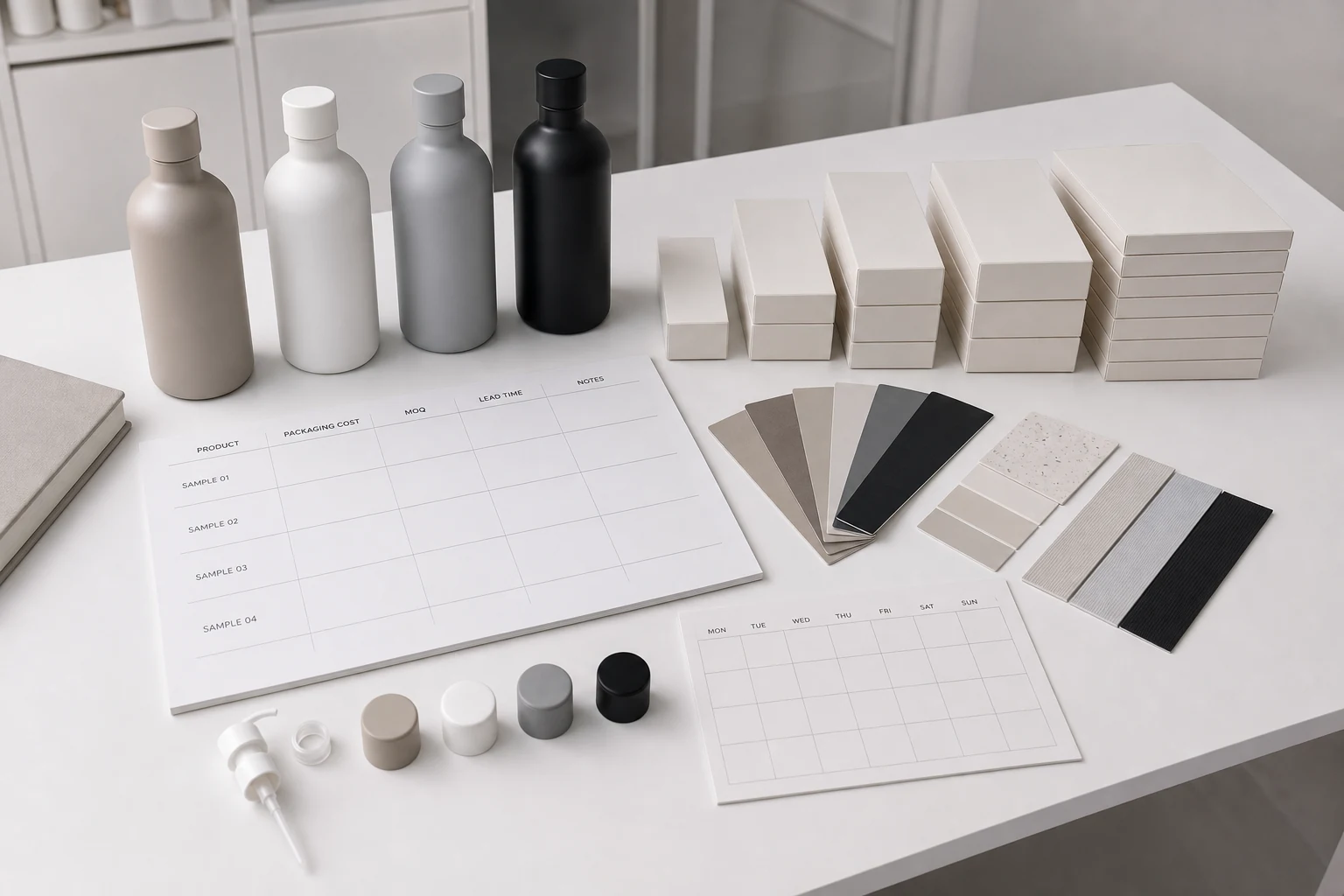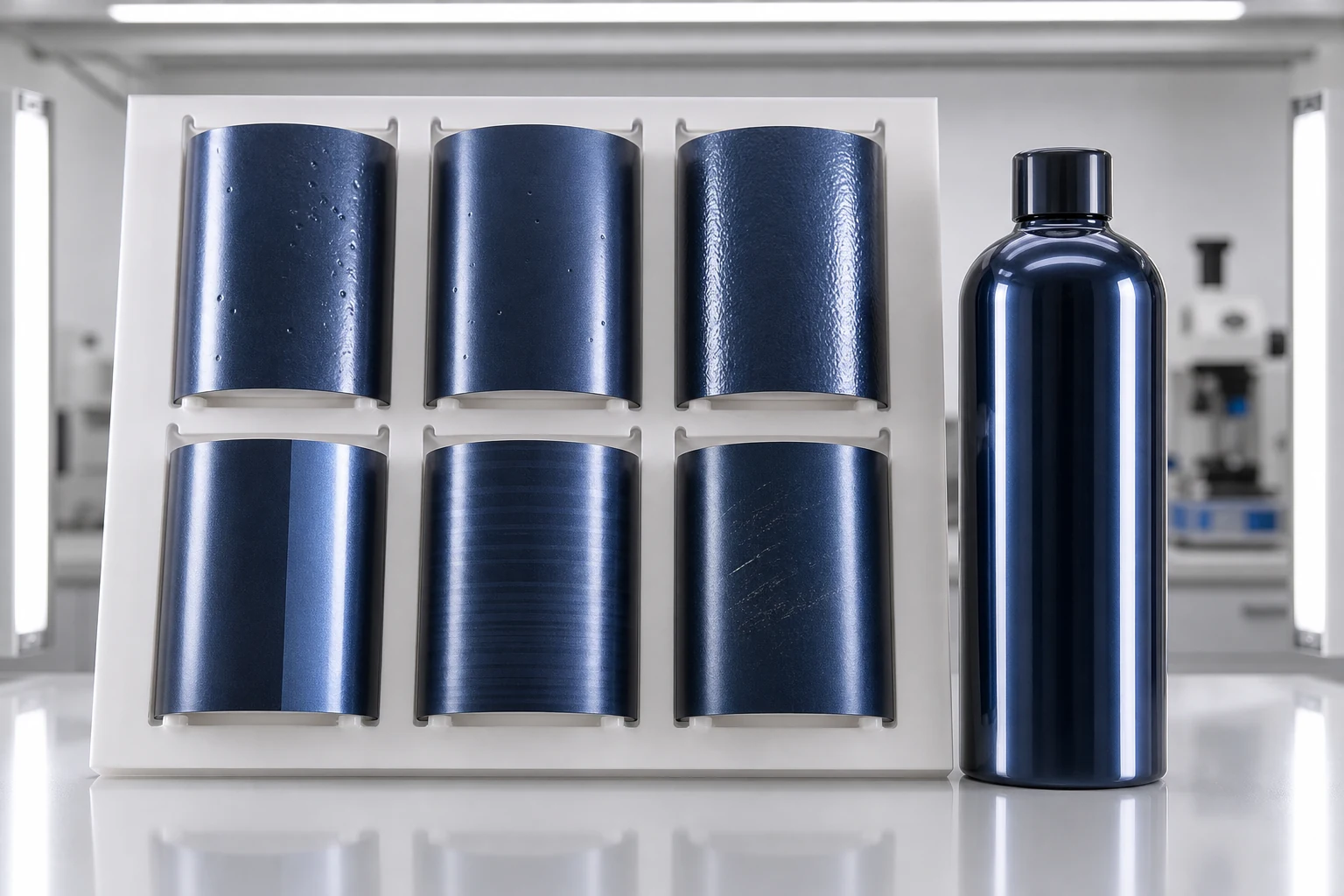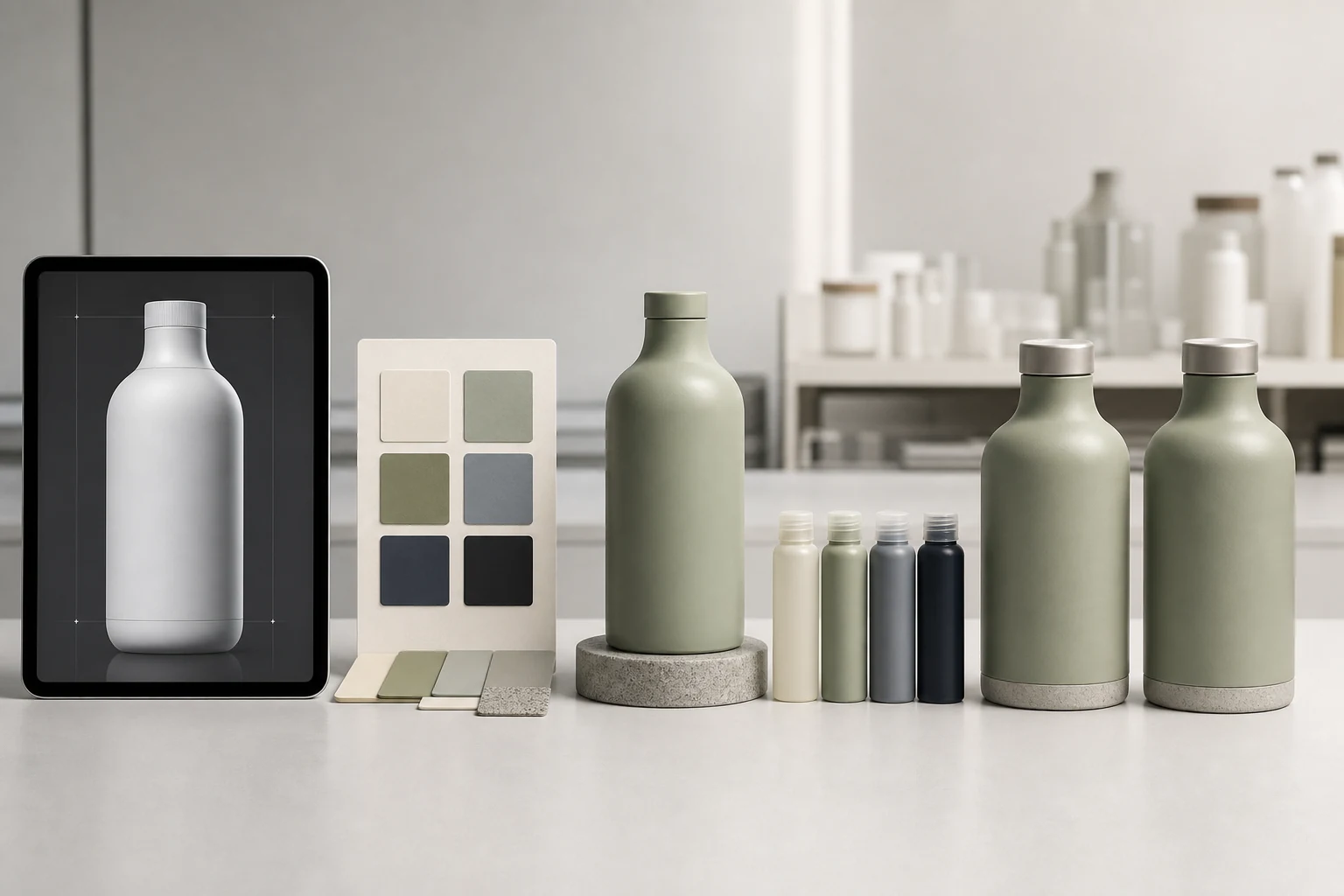
Approve a package through defined gates for container, surface, artwork, physical sample, performance, commercial scope, and retained production standard rather than one subjective mockup review.
A digital preview is excellent for choosing a direction. It is not a production approval. The safest path moves through a small number of explicit gates, each resolving a different kind of uncertainty before the next investment.
Gate 1: Container definition
Lock the production container supplier, material, capacity, geometry, neck finish, closure relationship, and intended front. Obtain drawings and representative samples.
Output:
- Approved container reference
- Dimensioned decoration drawing
- Qualified body area and restricted zones
- Known filling, capping, and handling conditions
Gate 2: Surface direction
Select the powder color family, RAL target where applicable, opacity, sheen, and effect. Decide coverage at the shoulder, heel, base, and closure interfaces.
The digital studio can record direction, but the gate closes with a physical color or effect reference and an agreed sampling brief.
Output:
- Named color target and alternatives
- Matte, satin, gloss, frost, metallic, flake, pearl, or prismatic direction
- Substrate and filled-state viewing requirements
- Initial performance expectations
Gate 3: Print method and artwork
Choose screen, UV, or powder print based on the image rather than habit. Prepare artwork using the actual container template. Define white, spot colors, transparency, QR behavior, and restricted regions.
Output:
- Preflighted source and composite files
- Print method and production separations
- Four-view mapped preview
- Open technical questions for the sample
Gate 4: Physical decorated sample
The sample should answer specific questions. It is not merely a miniature production run. Review color, sheen, effect, coverage, artwork position, wrap, detail, white behavior, and code scanning.
Record the container lot, materials, process route, and deviations from intended production. A hand-made sample can prove appearance without proving future process capability, so label its status honestly.
Gate 5: Performance qualification
Create a test matrix based on filling, packing, shipping, storage, and use. Identify the method, conditioning, sample size, acceptance criterion, and owner for each test.
| Risk | Possible evaluation |
|---|---|
| Coating or ink separation | Defined cross-cut or adhesion procedure before and after conditioning |
| Scuffing in distribution | Representative rub or packing simulation |
| Formula attack | Controlled exposure to actual product or justified simulant |
| Color or gloss drift | Instrumental and visual comparison under defined conditions |
| QR degradation | Scan verification before and after relevant exposure |
| Closure interference | Fill-line and torque or fit evaluation |
ASTM D3359 and ISO 2409 are often used in coating programs, but both publish scope and interpretation limits. The specification must name the current method and acceptance criterion rather than simply requesting “an adhesion test.” See ASTM D3359 and ISO 2409.
Gate 6: Commercial and schedule approval
Align the approved technical scope with quantity, SKU split, setup, testing, packing, freight, lead time, overrun policy, ownership of tools, and repeat-order assumptions.
Resolve whether the quote is based on the exact sampled construction. If the commercial version substitutes another powder, ink, container, or process route, identify what must be reapproved.
Gate 7: Production standard and change control
Retain signed physical samples from the qualified run. Link them to the specification, artwork revision, color reference, process route, and inspection plan.
Define which changes require notification or requalification:
- Container supplier, alloy, glass source, or prior treatment
- Powder or ink formulation
- Color, finish, or film target
- Pretreatment or cure process
- Print equipment, fixture, or artwork revision
- Packing method or expected product exposure
Use the Finish Studio as a project record
The studio selections can travel into the quote request with the container format, powder status, RAL match, finish effect, print method, artwork, placement, scale, QR status, and captured views. That creates a much better starting record than a contact form with only “looking for a purple bottle.”
The production team still converts those selections into controlled specifications and physical samples. The studio accelerates alignment; the approval gates create accountability.