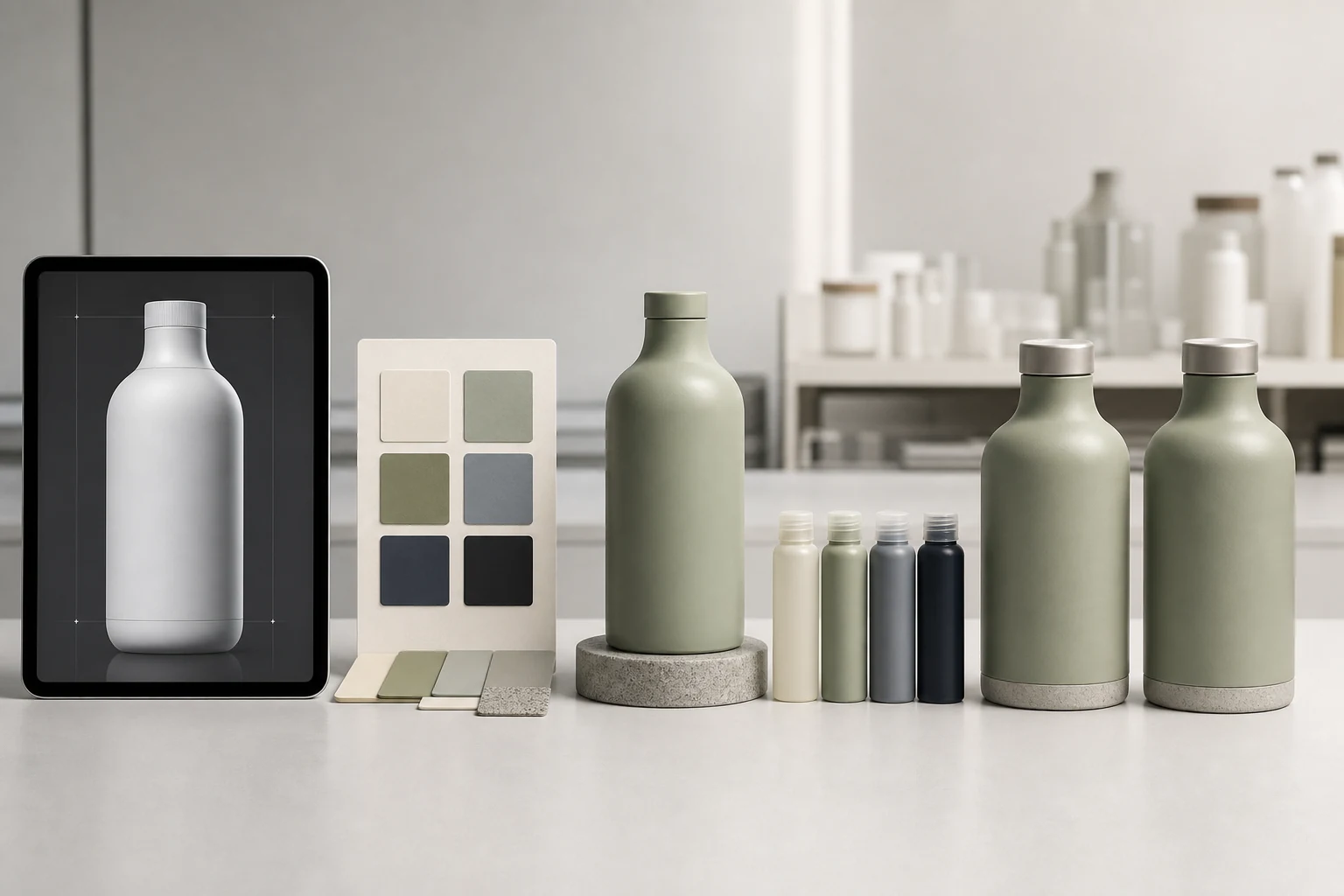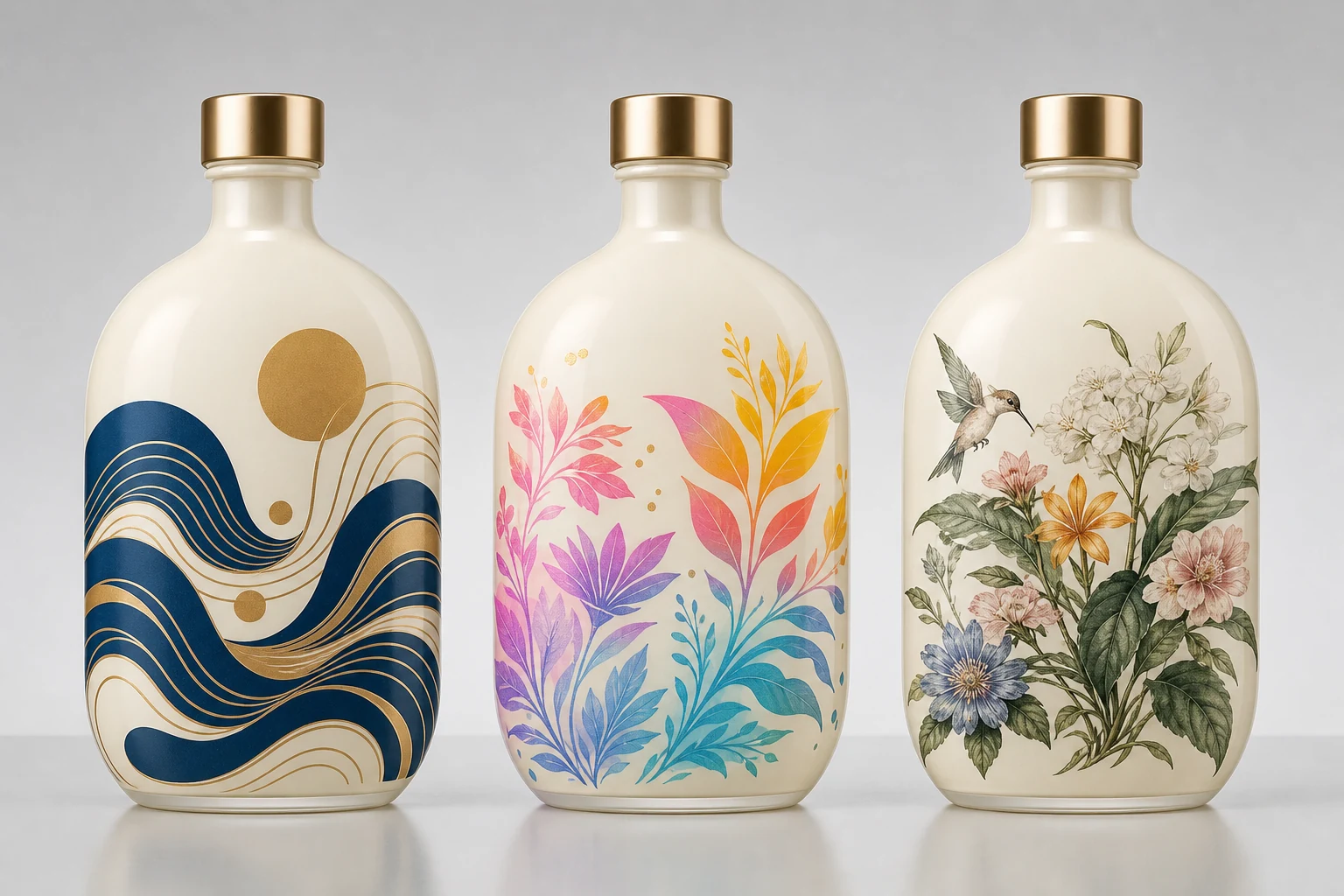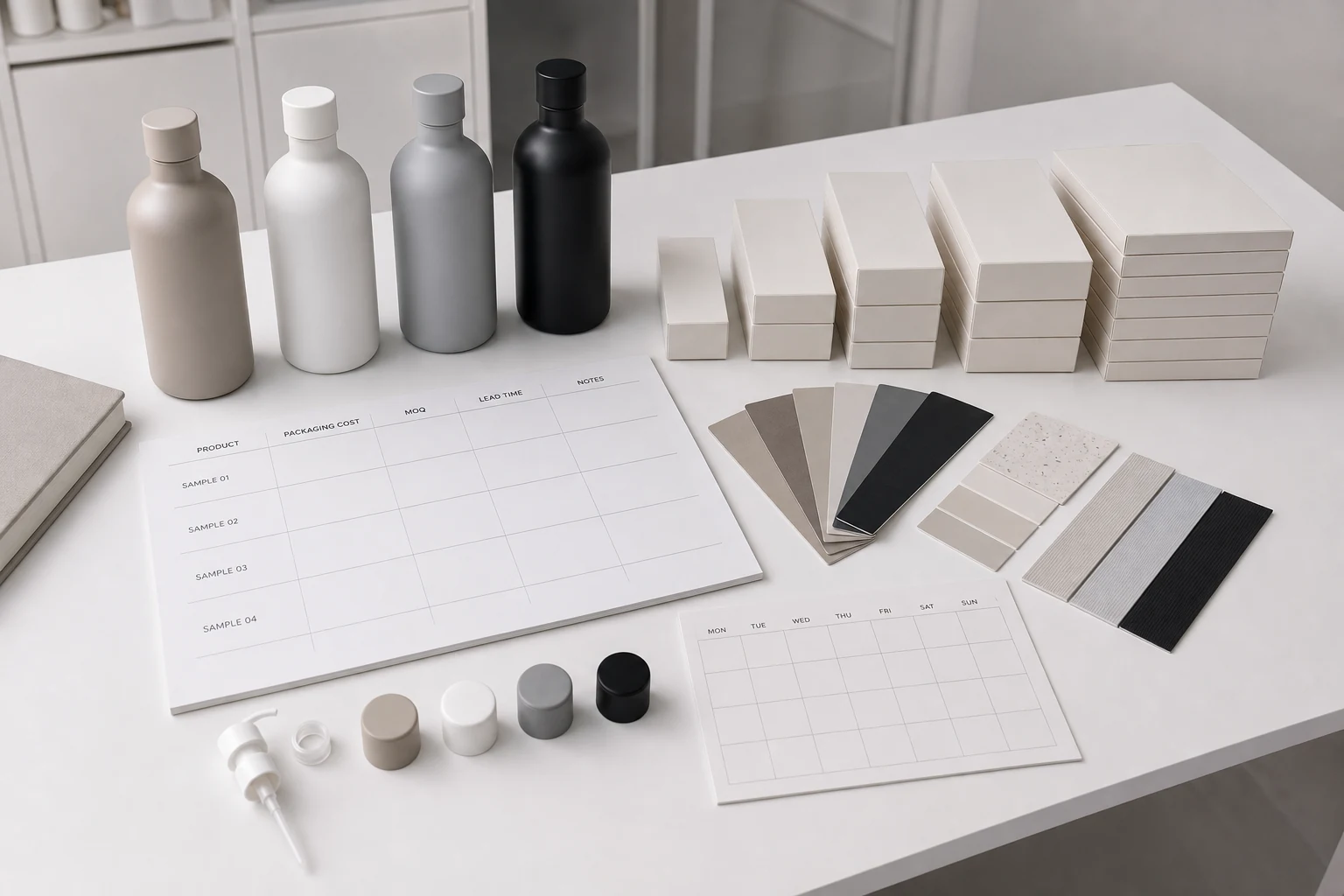
The meaningful cost is the total qualified project cost: container preparation, coating, print setup, per-unit production, inspection, packing, testing, freight, and version risk at the requested quantity.
A credible bottle-decoration quote cannot be reduced to a universal price per unit. The same artwork can cost differently on another container, finish, print method, quantity, quality requirement, or schedule.
The useful question is not “What does coating cost?” It is “What inputs must be fixed so suppliers are pricing the same production system?”
The main cost groups
| Cost group | Typical contents |
|---|---|
| Development | Container review, color work, artwork preflight, samples, testing |
| Setup | Cleaning line, powder change, screens, fixtures, print files, registration |
| Production | Material, line time, labor, cure, inspection, scrap allowance |
| Secondary work | Direct print, QR serialization, topcoat, special packing |
| Logistics | Container freight, work-in-process movement, finished-goods freight |
| Change risk | Obsolete versions, expedited work, late artwork, split releases |
Why minimum order quantities exist
A production line consumes time and material before the first acceptable saleable unit is complete. Color changes require cleaning and verification. Screen print requires separation and registration. A container may require dedicated fixtures or handling setup. Inspection standards must be established.
The MOQ spreads those fixed activities across enough units to create a workable run. It may be driven by the decorator, powder supplier, container supplier, or a combination.
Ask what the MOQ applies to:
- Total program
- Individual container format
- Powder color and finish
- Artwork version or SKU
- Print method and color count
- Release quantity or annual commitment
Setup charges are not interchangeable
Screen-print setup may include artwork separation, screens, fixtures, ink matching, and registration. Digital setup may include preflight, white generation, color conversion, machine setup, and qualification. Powder setup may include color development, line cleaning, material minimums, spray settings, cure profiling, and retained standards.
A low setup charge does not prove a low total cost, and a high setup charge may support efficient repeat production. Compare the whole program at realistic quantities.
Artwork and color complexity matter
For screen print, each additional color adds a separation and registration relationship. For full-color methods, image coverage, white ink, special channels, resolution, and variable data can affect production.
Custom colors or effects may require material development and supplier minimums. A nearby established RAL powder can be more straightforward than a one-off custom match, provided the physical result serves the brand.
Lead time has several clocks
Do not treat the quoted production slot as total elapsed time. A complete schedule may include:
- Container sourcing and incoming approval
- Color and finish selection
- Artwork preflight and revision
- Sample production
- Formula, compatibility, or performance testing
- Customer approval
- Material procurement
- Production scheduling
- Coating and printing
- Final inspection, packing, and freight
Late changes can restart more than one clock. Lock decision owners and approval timing at kickoff.
Request comparable quotes
Give every bidder the same:
- Container drawing, supplier, and samples
- Launch quantity, annual volume, and SKU split
- Powder color, finish, and coverage
- Print-ready or review-ready artwork
- Print method candidates and color count
- Required tests and acceptance criteria
- Packing scope and freight assumptions
- Desired sample and production dates
- Ownership expectations for screens, fixtures, and retained materials
Then ask for development, setup, unit cost, overrun or underrun policy, scrap assumptions, testing, packing, freight, and repeat-order pricing as separate lines.
Use cost to improve the design
Cost review can sharpen the package rather than merely remove features. A three-color screen design may become stronger when reduced to two colors plus the powder background. A broad opaque digital panel may become more distinctive when the image is isolated and uses less white. One common coated container with versioned direct print may reduce component complexity.
The goal is value engineering: preserve what the customer sees and uses while removing cost that does not contribute to the package.