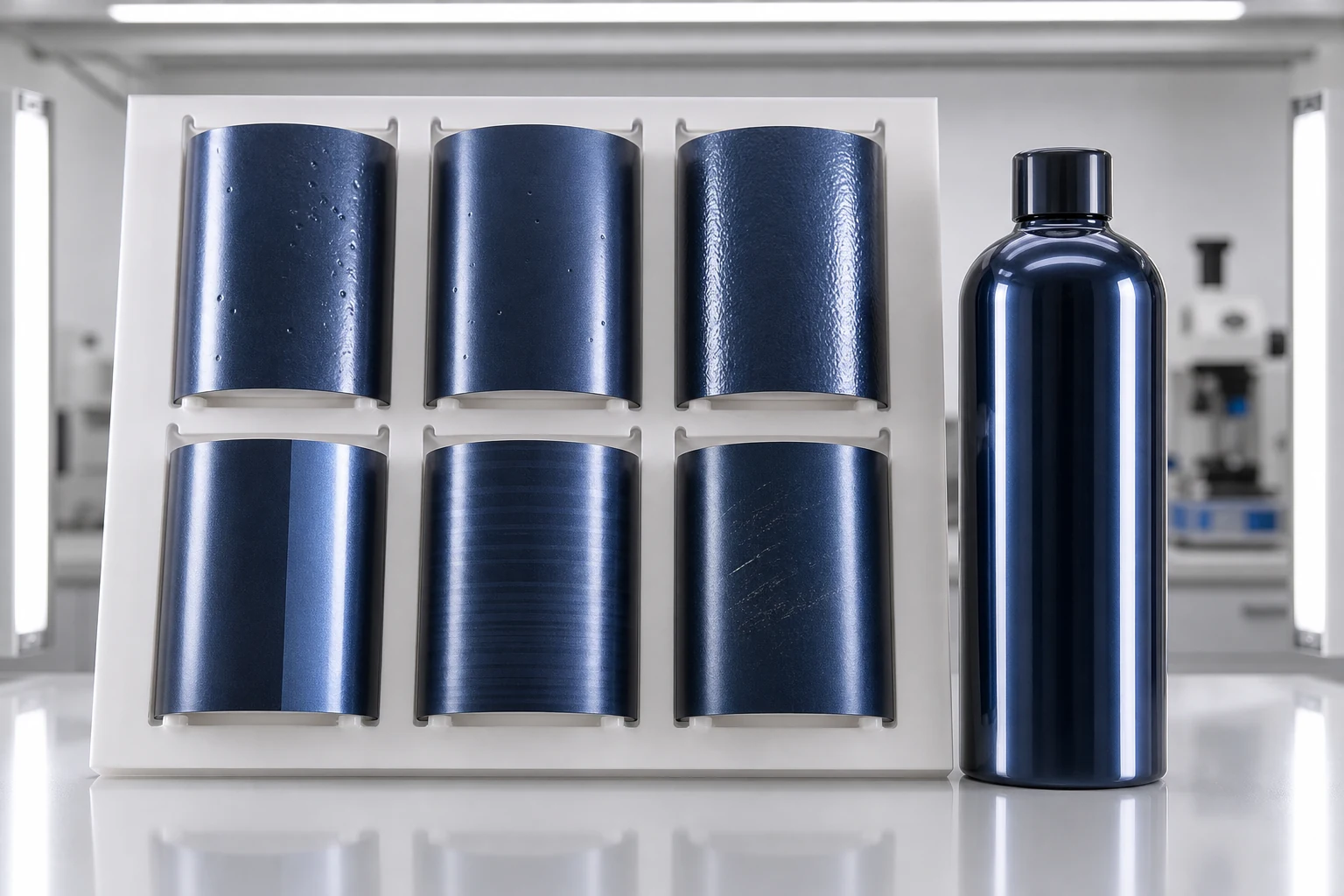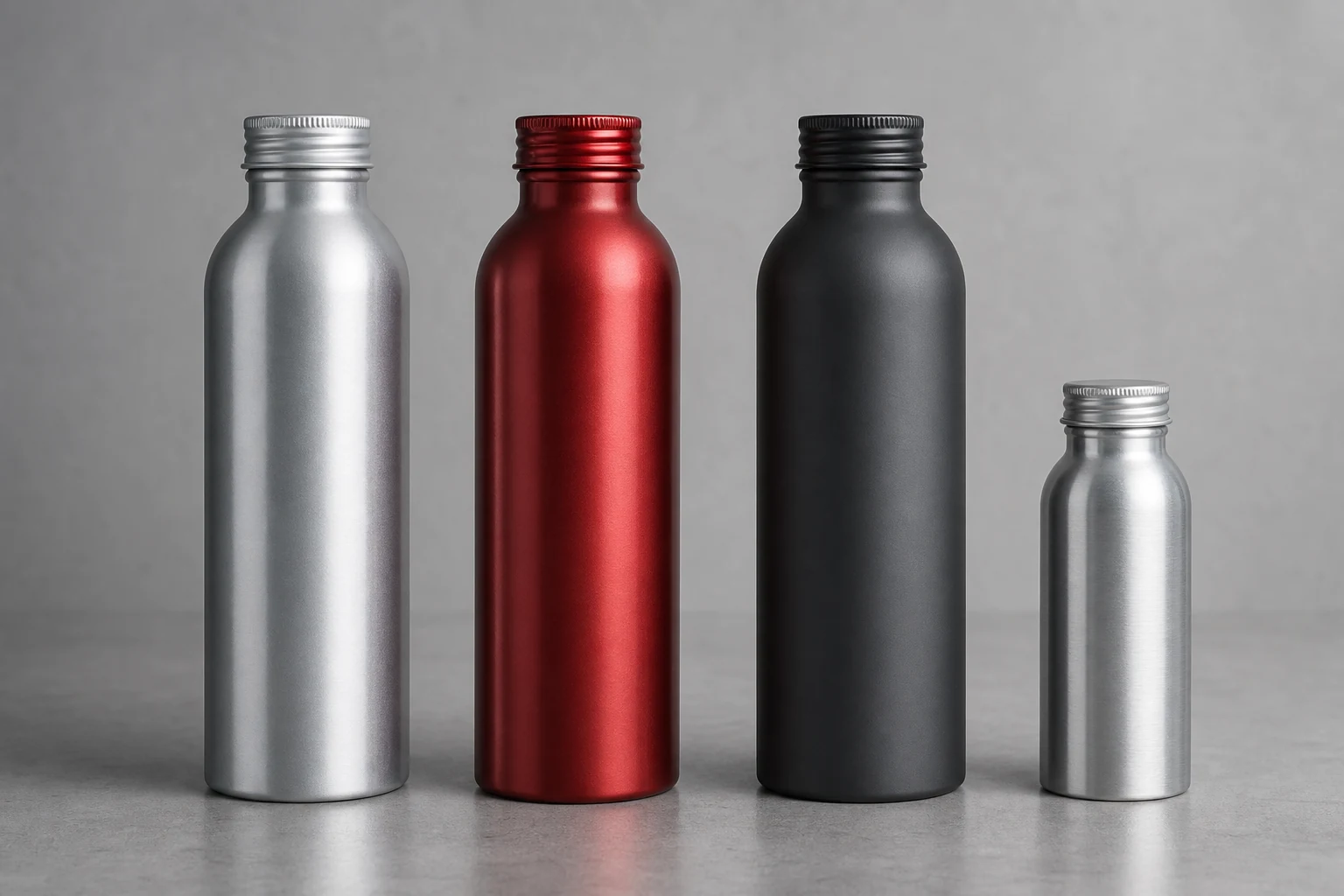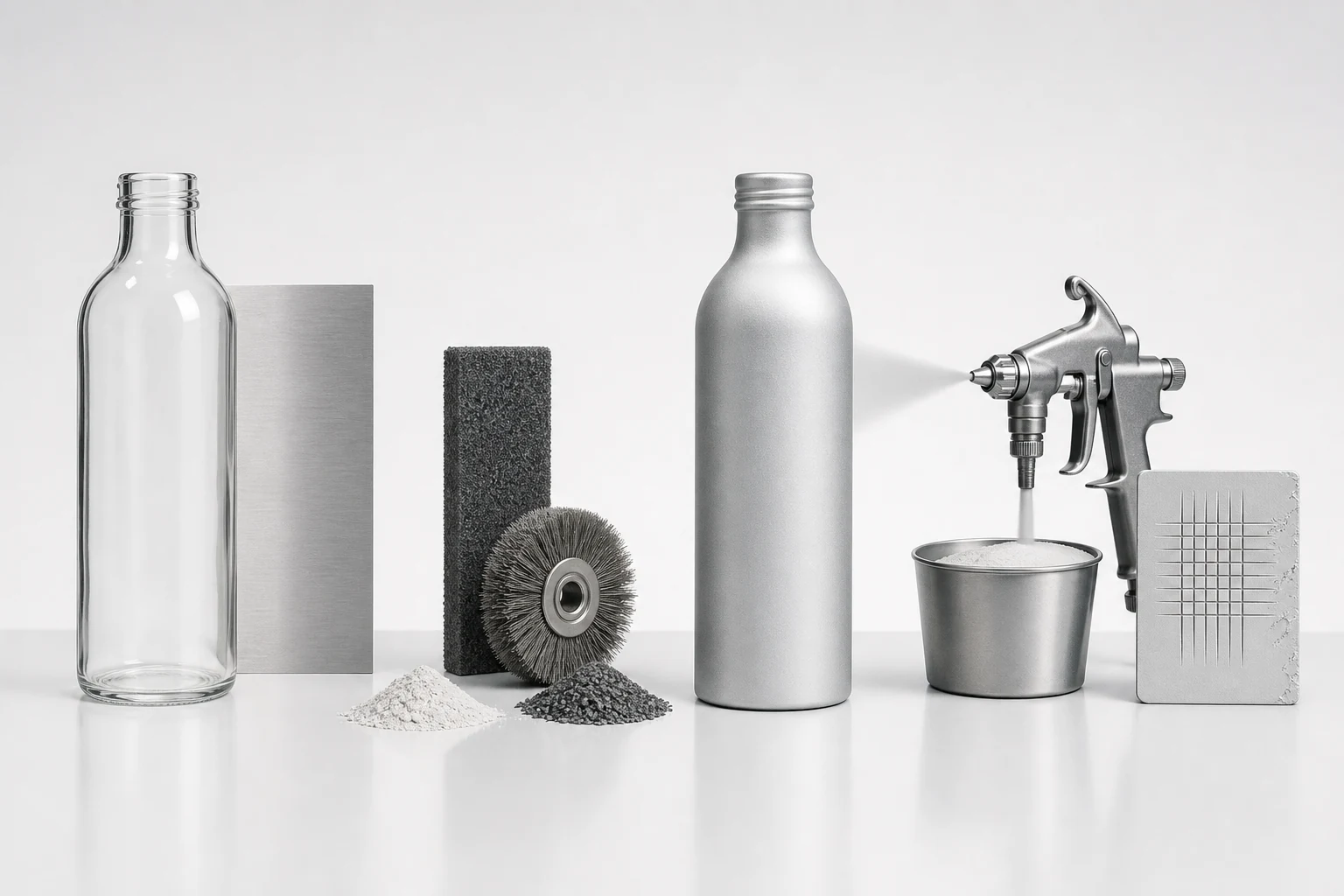
Reliable adhesion requires a controlled incoming surface, compatible cleaning and pretreatment, complete cure, and testing of every interface in the coating-print system after realistic conditioning.
Adhesion failure is often blamed on the material that visibly detached. The actual cause may have occurred much earlier: incoming contamination, incomplete cleaning, uncontrolled pretreatment, undercure, excessive delay, incompatible additives, or handling between operations.
Identify every interface
A decorated package may contain several bonds:
- Substrate to pretreatment or adhesion promoter
- Pretreatment to powder background
- Powder background to direct-print ink
- Ink to any protective clear layer
A cross-cut can reveal separation within that stack without proving which earlier process variable caused it. Record the failure plane whenever possible.
Control the incoming container
Glass can carry dust, fingerprints, water residue, lubricants, or packing abrasion. Formed metal can carry drawing compounds, oils, oxides, and prior conversion treatments. Supplier or lot changes can alter the incoming surface even when the dimensions remain unchanged.
The receiving specification should identify material, supplier, prior treatment, cleanliness expectations, packaging method, and any storage limits. Keep suspect lots separated until compatibility is confirmed.
Cleaning must be repeatable
Cleaning is a defined process, not a visual judgment. Control chemistry, concentration, temperature, contact time, rinsing, water quality, drying, and handling after cleaning.
Do not assume a stronger cleaner is automatically better. Residue or an incompatible attack on the surface can be as damaging as insufficient cleaning. Select the process with the coating and pretreatment suppliers and verify it on the production container.
Pretreatment and activation are system specific
Metal packages may use a conversion treatment or another compatible preparation to improve consistency and corrosion performance. Glass may use a chemistry designed to promote bonding to its surface. The direct-print layer may require a cured coating with a particular surface condition or activation.
Avoid publishing one universal surface-energy number or one treatment recipe. The required condition depends on the ink, coating, substrate, measurement method, and time between treatment and printing.
Cure controls final properties
For thermoset powder, cure depends on the actual product temperature and time. The Powder Coating Institute notes that both conditions must meet the powder's requirements. See the PCI cure FAQ.
Ink cure is equally important. An apparently dry UV print may still underperform if the dose, spectrum, film, or shadowing is wrong. Validate using the line's process controls and material supplier instructions.
Use adhesion tests within their limits
ASTM D3359 covers tape-test procedures for relatively ductile coating films on metal. ASTM states that the method evaluates lower levels of adhesion and may reveal failure between coats rather than at the substrate. See ASTM D3359.
ISO 2409 specifies a cross-cut classification method for coatings and states that it assesses resistance to separation rather than measuring adhesion. It is not suitable for every coating thickness or texture. See ISO 2409.
| Test question | Useful approach | Limitation to remember |
|---|---|---|
| Does the film separate after a defined cut and tape procedure? | ASTM D3359 or agreed cross-cut method | Does not measure high adhesion strength |
| How does the system behave after water or chemical exposure? | Condition, then repeat agreed inspection | Exposure must represent actual product use |
| Which layer failed? | Microscopic or careful failure-plane inspection | Mixed failures may require deeper analysis |
Condition before deciding
Test initial adhesion and adhesion after the environments that matter: water, alcohol, oil, product formula, humidity, heat, cold, or aging. A package can pass immediately after decoration and weaken after the film or interface equilibrates.
Define sample age, conditioning, cut tool, tape, dwell, removal method, inspection, and acceptance rating. Without those details, “passed tape test” is not repeatable.