Powder coating can create a continuous decorative film on glass, but the process must be engineered around glass surface condition, application behavior, cure limits, geometry, and end-use testing.
Glass gives brands a chemically stable, rigid, and premium-feeling container, but its smooth surface and variable manufacturing history make decoration a qualification project. A coating system that works on one bottle should not be assumed to work identically on another supplier's glass without evaluation.
What powder coating contributes
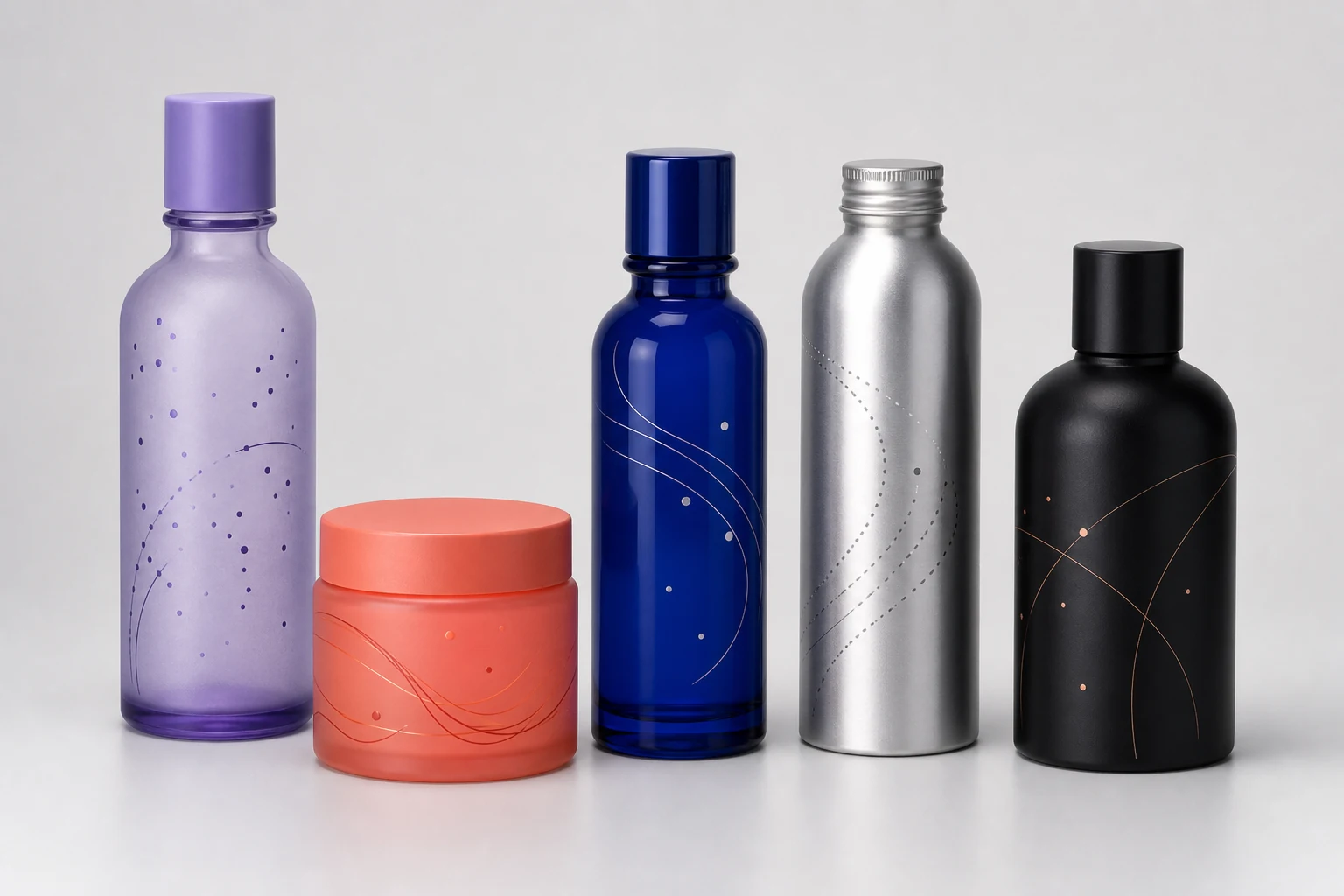
Powder backgrounds can create an uninterrupted field of color without a label edge. Depending on the formulation and application, the result may be opaque, softly translucent, matte, satin, gloss, metallic, or effect-driven. Direct artwork can then sit over that background while open areas reveal the coating.
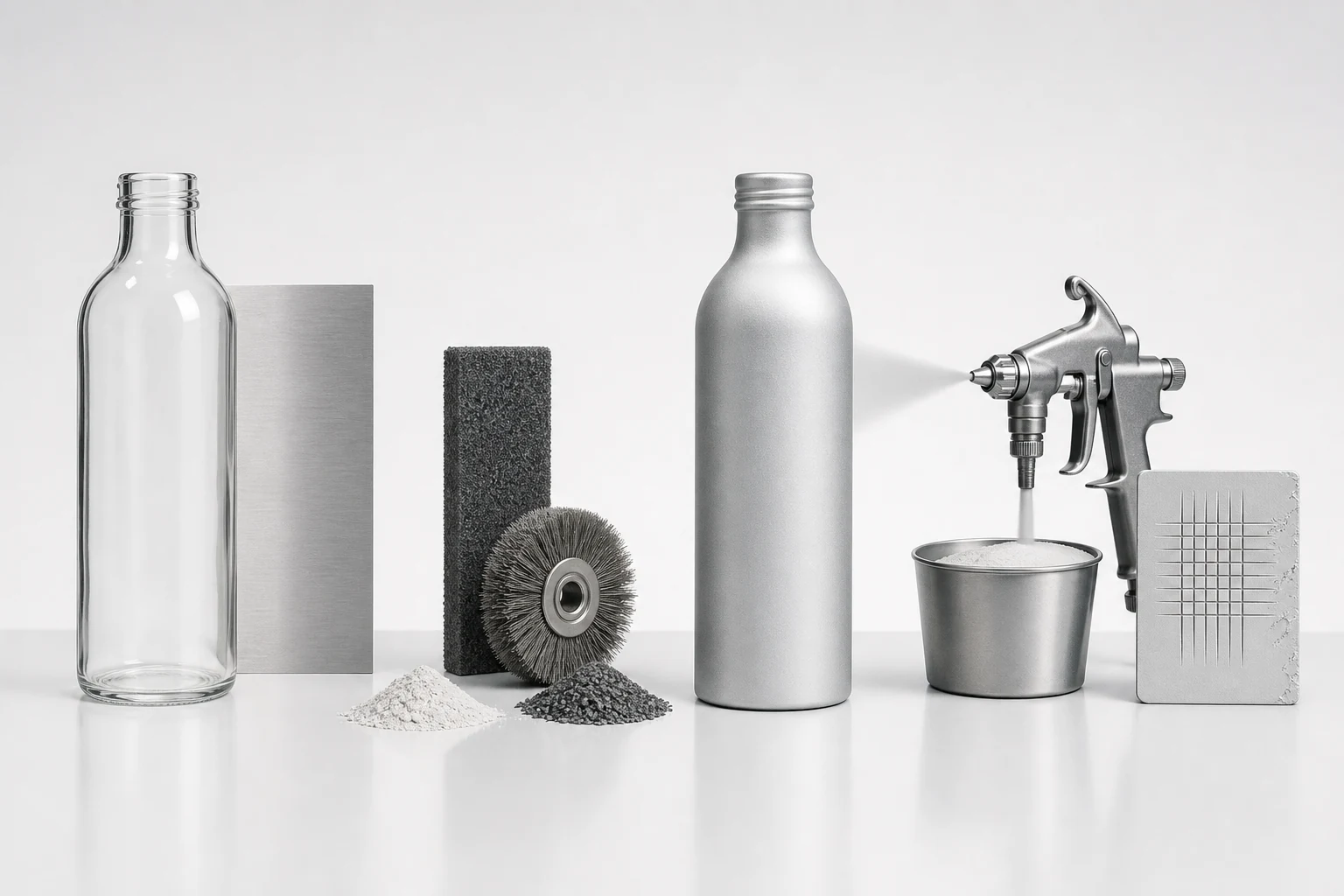
The Powder Coating Institute describes powder as a blend of polymer resin, curatives, pigments, flow modifiers, and other additives that is deposited and cured into a continuous film. Its standard explanation centers on conductive metal. Glass therefore requires a process specifically configured for a non-metallic substrate rather than a simple transfer of metal settings.
Surface condition controls adhesion
Incoming glass may carry dust, fingerprints, lubricants, mold-release residue, water spots, or packaging abrasion. These contaminants can create local adhesion loss, craters, or visible inclusions beneath a smooth finish.
A controlled process normally begins with an agreed cleaning sequence and limits unnecessary handling after cleaning. The correct preparation depends on the coating chemistry and container. It may include washing, rinsing, controlled drying, and a compatible adhesion-promoting treatment. The coating supplier's technical instructions and actual validation results should govern the final process.
A clean-looking bottle is not necessarily a chemically clean coating surface.
Opacity and frost are different design tools
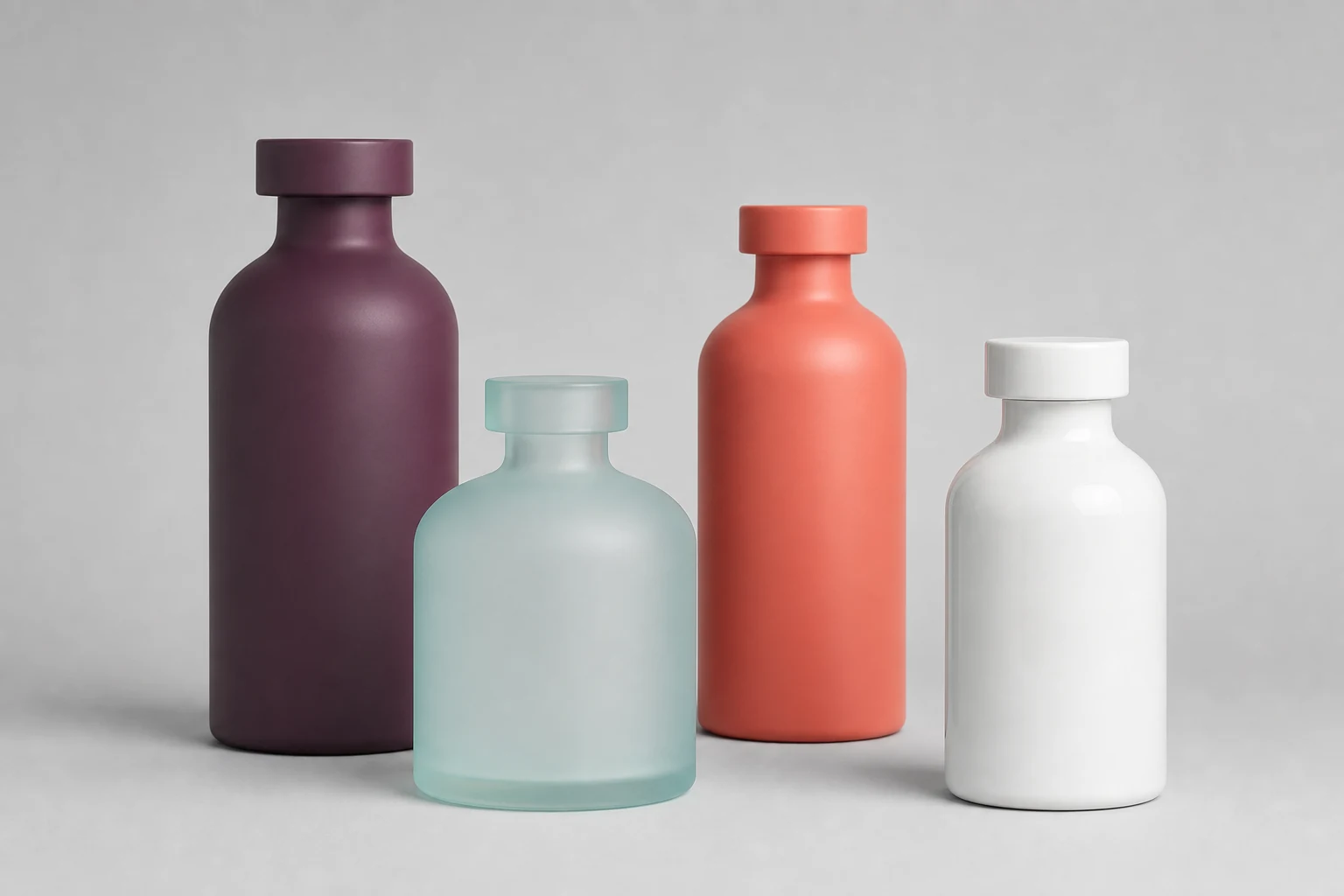
An opaque powder background visually replaces the underlying glass color. A frost-effect finish scatters light while preserving some relationship with the glass and product inside. These should be specified separately.
For frost, evaluate the empty container and the intended fill because the product color, fill level, wall thickness, and rear decoration can change the appearance. A translucent finish that looks even on clear empty glass may read darker or more saturated after filling.
| Finish direction | What it emphasizes | What to evaluate |
|---|---|---|
| Opaque matte | Shape and saturated color | Coverage at shoulders, base, and handling points |
| Opaque gloss | Color depth and sharp reflection | Surface cleanliness, waviness, and visible defects |
| Frost | Glass and product interaction | Uniform light scatter and filled appearance |
| Metallic | Highlight movement and premium effect | Flake orientation and color under multiple angles |
Geometry affects film appearance
The shoulder, heel, base push-up, embossed details, and neck transition can receive material differently from the main cylindrical body. The specification should state which regions are cosmetic and which are intentionally restricted.
Very sharp transitions can make thickness and appearance harder to control. Heavy coating buildup can soften embossed detail. Conversely, insufficient coverage at a shoulder or heel can reveal the glass in a way that looks like a defect. Approving only the front panel is not enough; inspect the entire circumference and transition areas.
Cure must protect the container and the film
Powder cure is a time-and-temperature relationship defined by the selected material and process. PCI notes that a thermoset powder needs both the specified temperature and time to achieve proper cure. The relevant value is the product's actual thermal profile, not simply the oven air setting. See the PCI powder coating FAQ.
For glass packaging, the process must also avoid unacceptable thermal shock or handling stress. Container design, glass condition, line temperature changes, and cooling all belong in the qualification plan.
Qualification checklist
Before production approval, evaluate:
- Appearance on multiple containers from production-representative lots
- Coverage around the full circumference, shoulder, heel, and base
- Adhesion after cure and after relevant environmental conditioning
- Abrasion from packing, partitions, conveyors, and consumer handling
- Resistance to the intended product, cleaning agents, oils, alcohol, or water exposure
- Color and gloss under controlled lighting
- Compatibility with direct print and any topcoat
- Closure fit, fill-line handling, and dimensional interfaces
ISO 2409 provides a cross-cut method for classifying resistance to separation, but it is not a measurement of adhesion force and is not suitable for every coating thickness or texture. Use it only where appropriate and define the acceptance class in advance. See ISO 2409:2020.
What to send for development
Provide actual uncoated containers, supplier and material information, desired coverage, physical color reference, finish target, fill product, filling and capping conditions, expected environment, and artwork intent. That information allows the surface and print layers to be developed together rather than discovering incompatibilities after artwork approval.