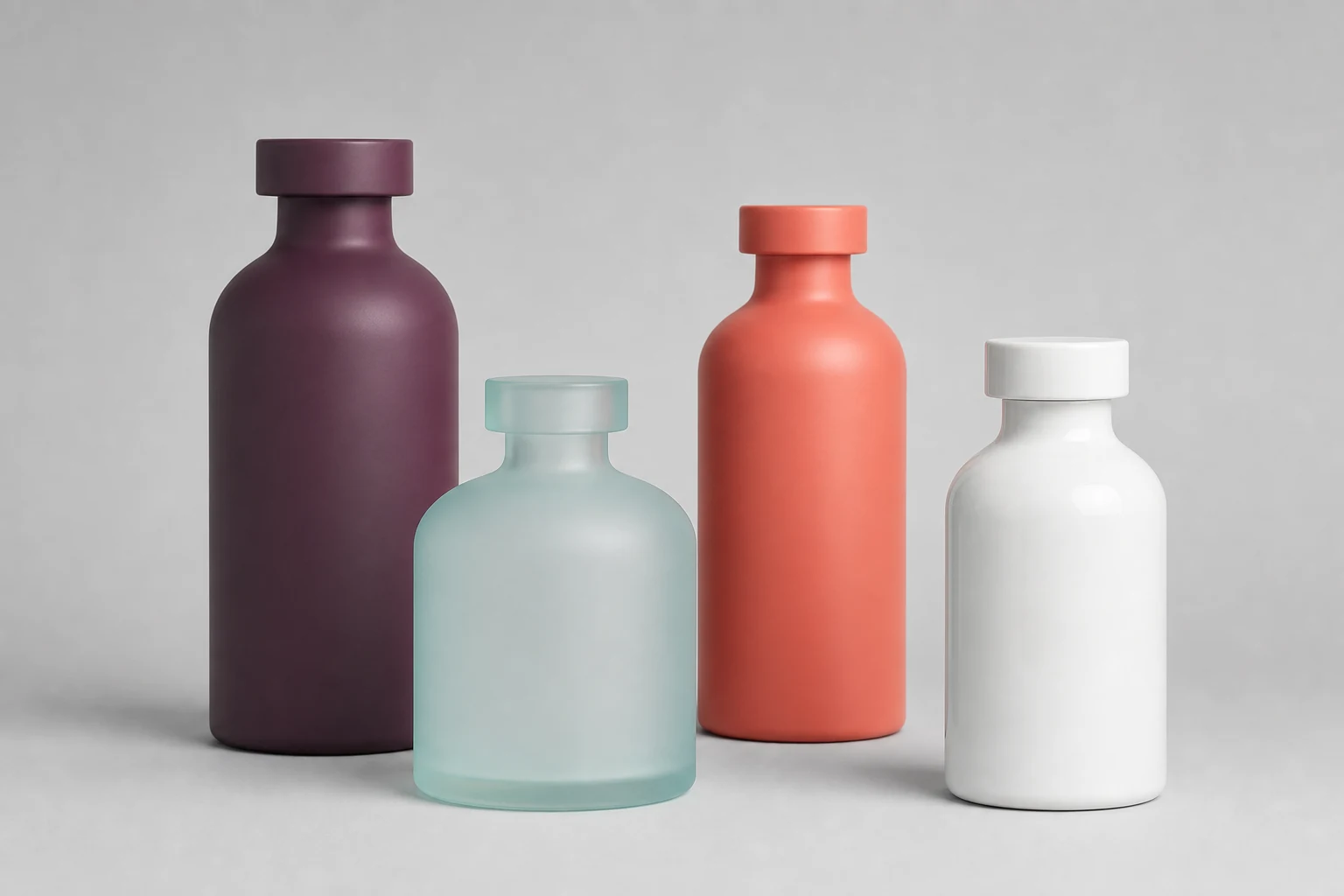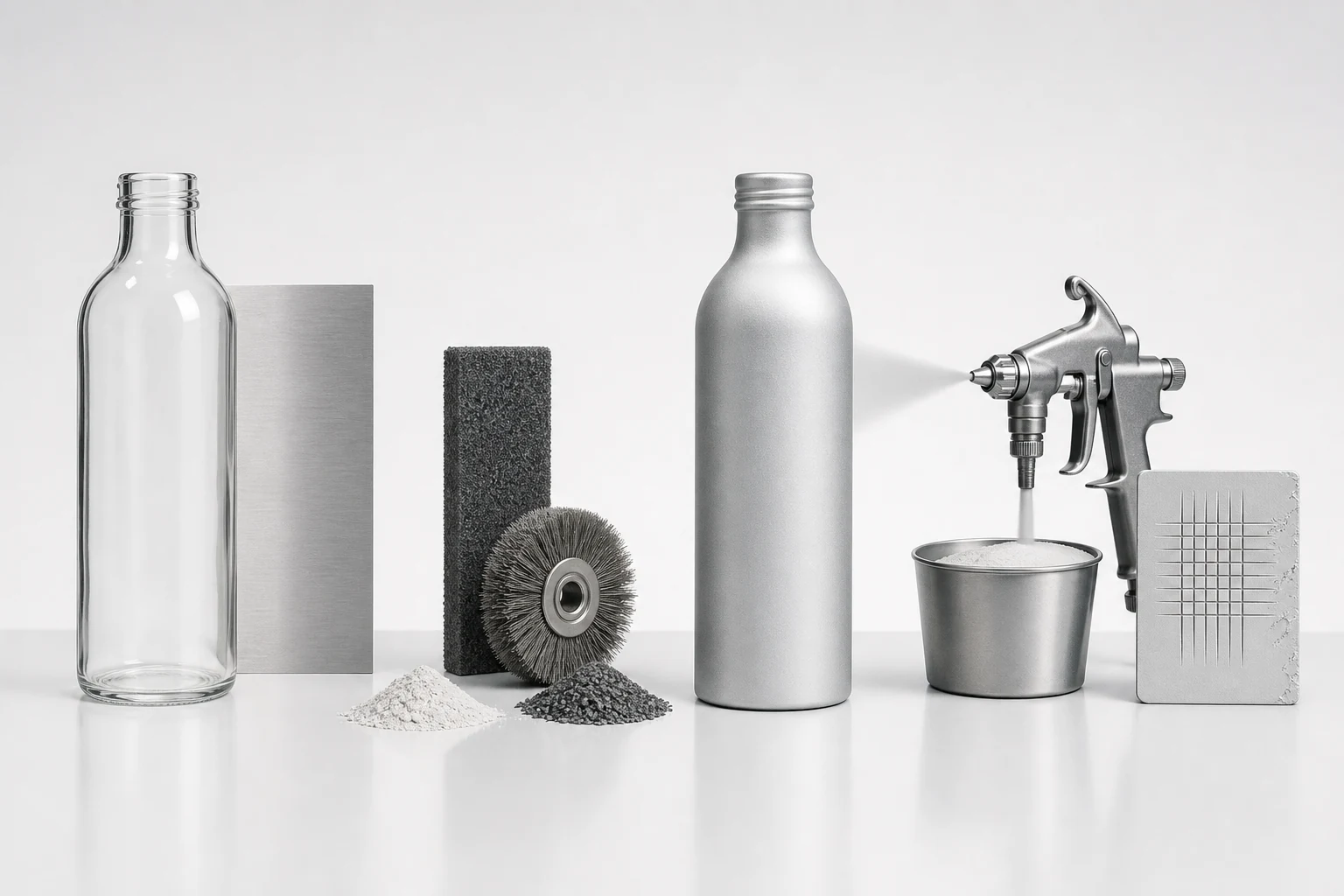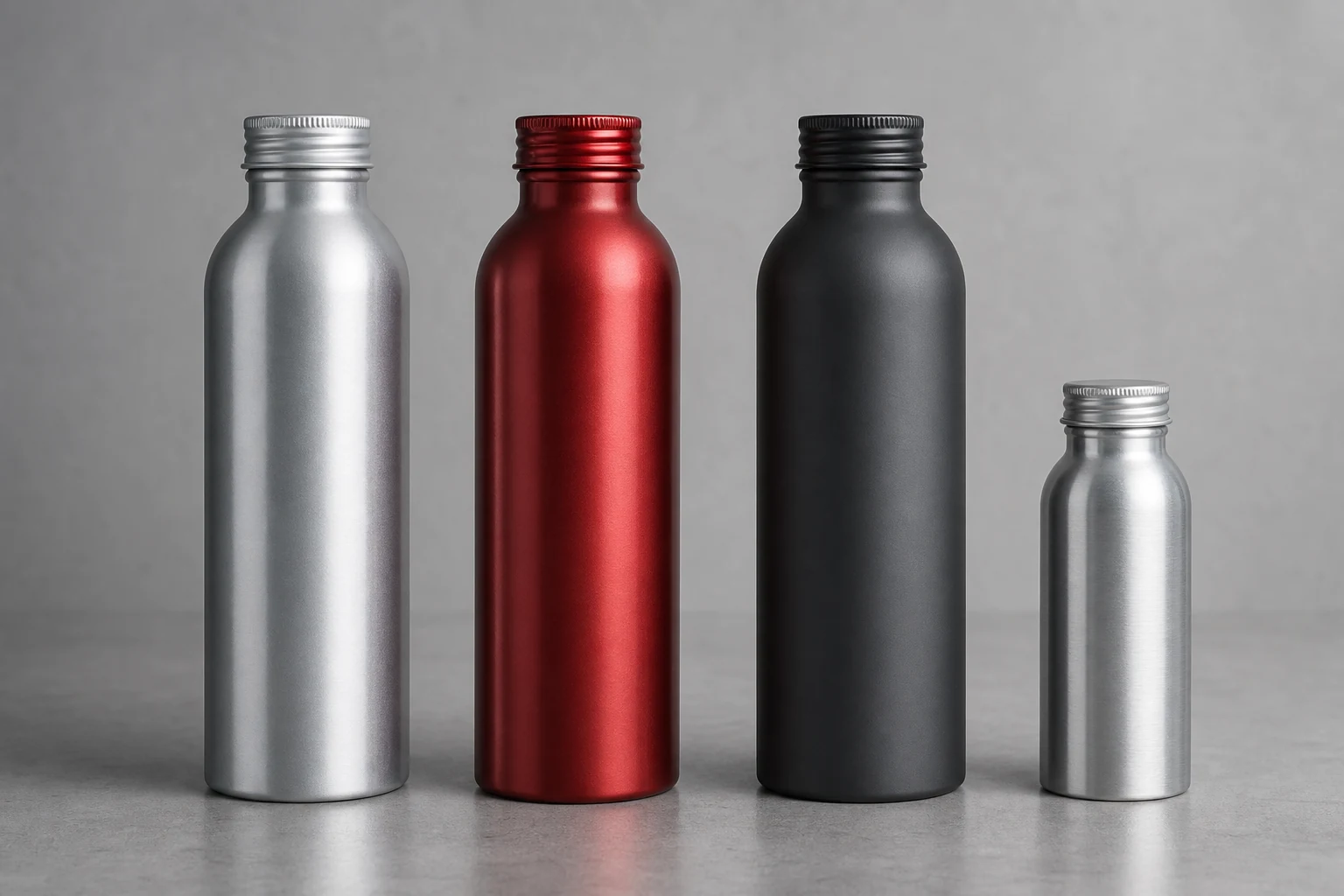
Metal bottles are well suited to electrostatic powder application, but durable decoration still depends on removing forming residue, controlling pretreatment and cure, and testing the complete coating-print system.
Conductive metal is the conventional substrate for electrostatic powder coating. That makes aluminum and steel bottles natural candidates for a continuous colored background, but conductivity alone does not guarantee a good package. Forming oils, oxides, conversion treatment, wall thickness, cure exposure, and post-decoration handling all influence the result.
The standard powder process
In electrostatic spray deposition, a spray gun charges powder particles and the grounded metal part attracts them. The deposited powder is then heated so it melts, flows, and cures into a film. This is the core process described by the Powder Coating Institute.
Container work adds cosmetic expectations that may be more demanding than ordinary industrial parts. A bottle is viewed at close range, rotated in the hand, photographed under hard light, and expected to maintain registration with small printed details.
Cleaning and pretreatment come first
Aluminum bottles can arrive with drawing compounds, handling oils, oxide, or storage contamination. Steel containers present their own surface and corrosion considerations. A qualified cleaning and pretreatment sequence creates a consistent interface for the coating and reduces the chance of local non-wetting, craters, or adhesion loss.
The correct chemistry depends on the alloy, prior treatment, coating system, and end use. It should be selected with the pretreatment and powder suppliers and validated on formed production containers. The Aluminum Association publishes dedicated guidance on cleaning and finishes, reflecting how strongly surface condition affects finished aluminum. See Care of Aluminum.
Metal changes the visual result
An opaque powder can hide metal color, but metallic and translucent systems may intentionally interact with it. Consider the base metal, primer or conversion layer, powder film, and top decoration as one optical stack.
| Direction | Strength | Watch point |
|---|---|---|
| Solid matte | Quiet color and reduced glare | Burnishing at high-contact areas |
| Solid gloss | Strong depth and clean highlights | Surface waviness and handling marks |
| Bonded metallic | Even premium metallic read | Reclaim consistency and angle-dependent color |
| Flake effect | Sparkle and visual depth | Flake scale, orientation, and print legibility |
| Textured finish | Grip and defect masking | Fine artwork and code readability |
Film buildup follows electrostatics and geometry
Edges and transitions can collect powder differently from broad cylindrical areas. Recesses can be harder to reach because of the Faraday cage effect, while excessive charge can contribute to back ionization and poor appearance. PCI defines both phenomena in its powder coating glossary.
On a bottle, inspect the shoulder, base radius, closure transition, embossed features, and any handling interface. The approved film should not interfere with cap fit, threads, sealing surfaces, or grounding points needed by later operations.
Cure is a material profile, not an oven number
The powder supplier defines a cure window based on part temperature and time. Thin metal containers can heat quickly, but line speed, load, color, and oven behavior still affect the profile. Undercure can reduce film performance; excessive thermal exposure can distort components, change appearance, or affect other package materials.
Use temperature profiling on representative production loads and document the operating window. If direct printing follows, confirm that the cured surface has the adhesion, surface energy, and cleanliness required by the ink system.
Corrosion and multi-metal details
Aluminum naturally forms an oxide layer, while steel requires careful corrosion protection. Dissimilar metal contact can create additional risk when moisture is present. The Aluminum Association notes that metal combinations and moisture exposure influence galvanic corrosion behavior. Package components such as closures, springs, or decorative hardware should therefore be assessed as an assembly, not just as isolated finishes. See its aluminum structures guidance.
Production approval checklist
- Identify alloy or metal type and incoming surface treatment
- Approve cleaning and pretreatment on formed production containers
- Define the coating film, color reference, gloss, and acceptable texture
- Profile actual part temperature through the cure process
- Inspect 360-degree coverage and closure interfaces
- Test adhesion, abrasion, chemical resistance, and corrosion exposure appropriate to use
- Verify ink adhesion and registration after coating
- Retain approved physical standards from the qualified run
ASTM D3359 is commonly referenced for tape testing on metal, but ASTM cautions that it evaluates lower levels of adhesion and does not distinguish stronger bonds. It can also expose separation between layers rather than at the metal. See ASTM D3359.