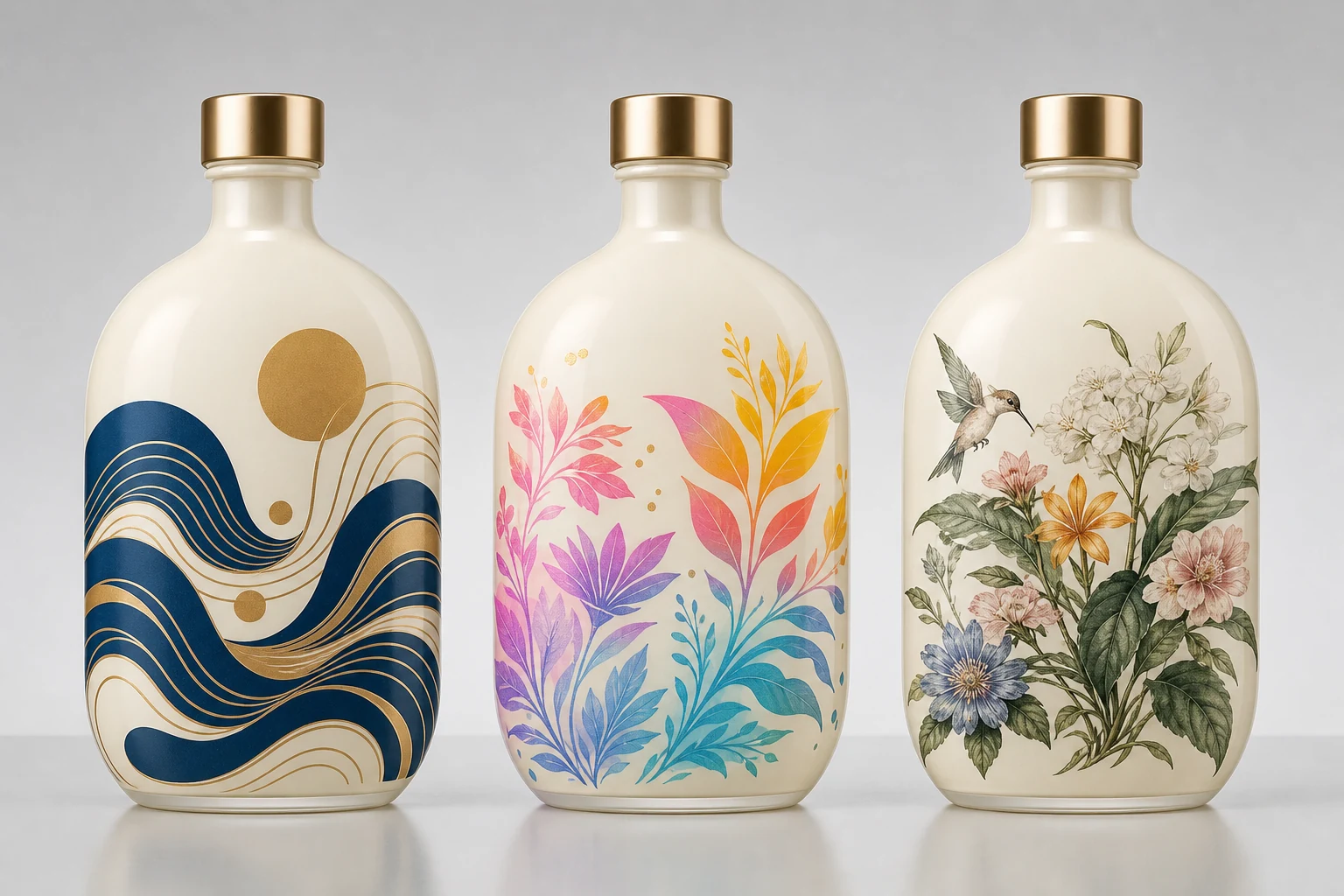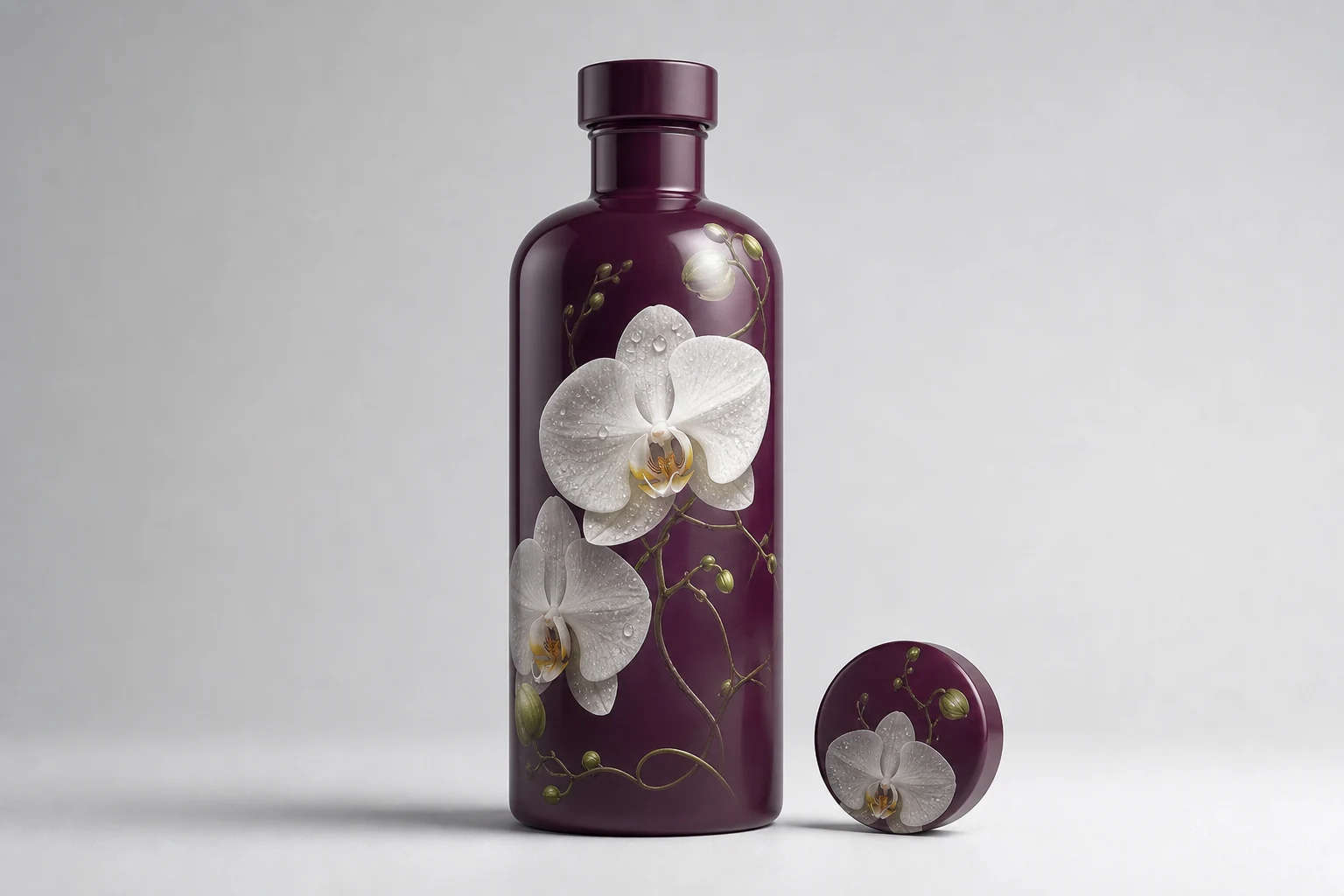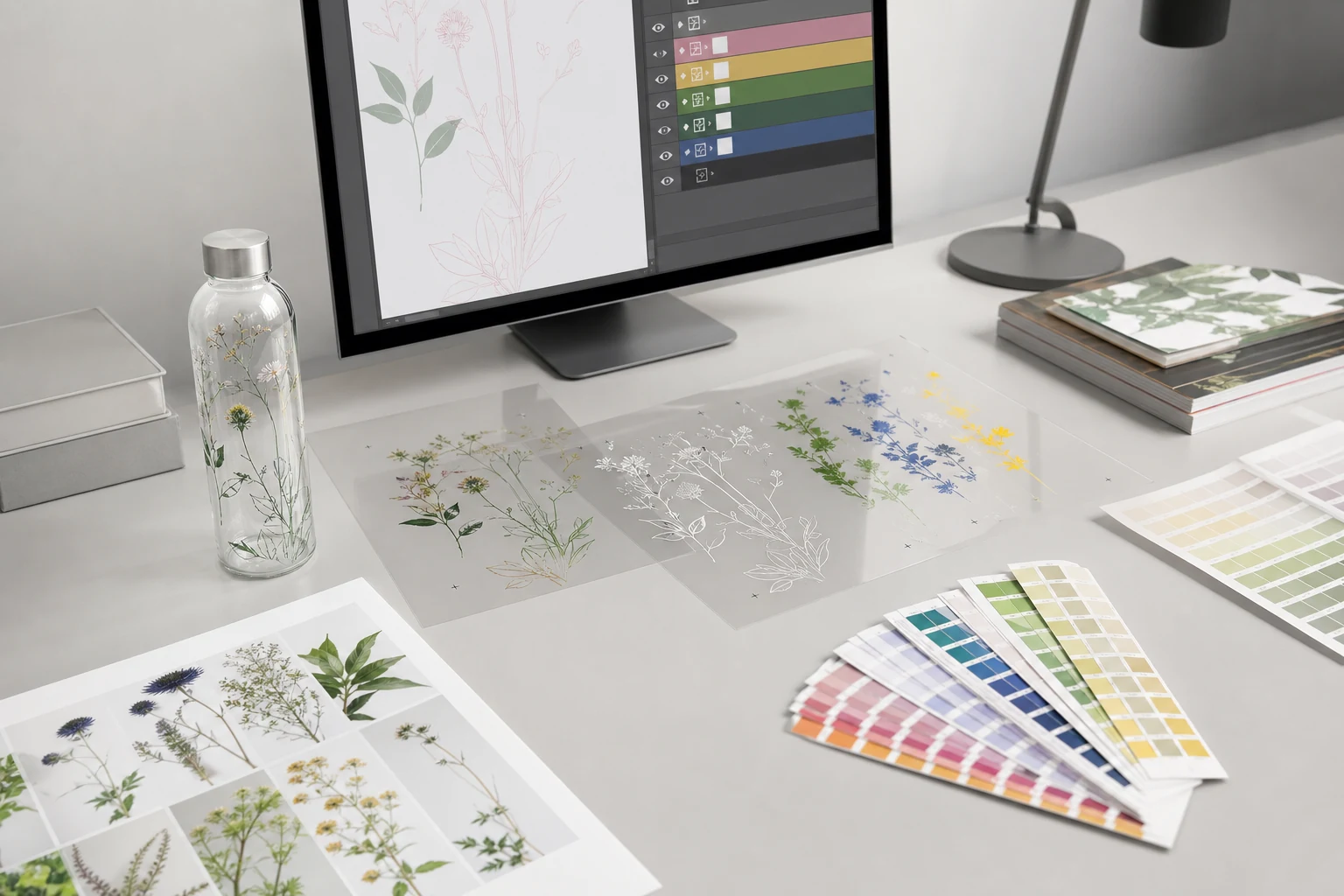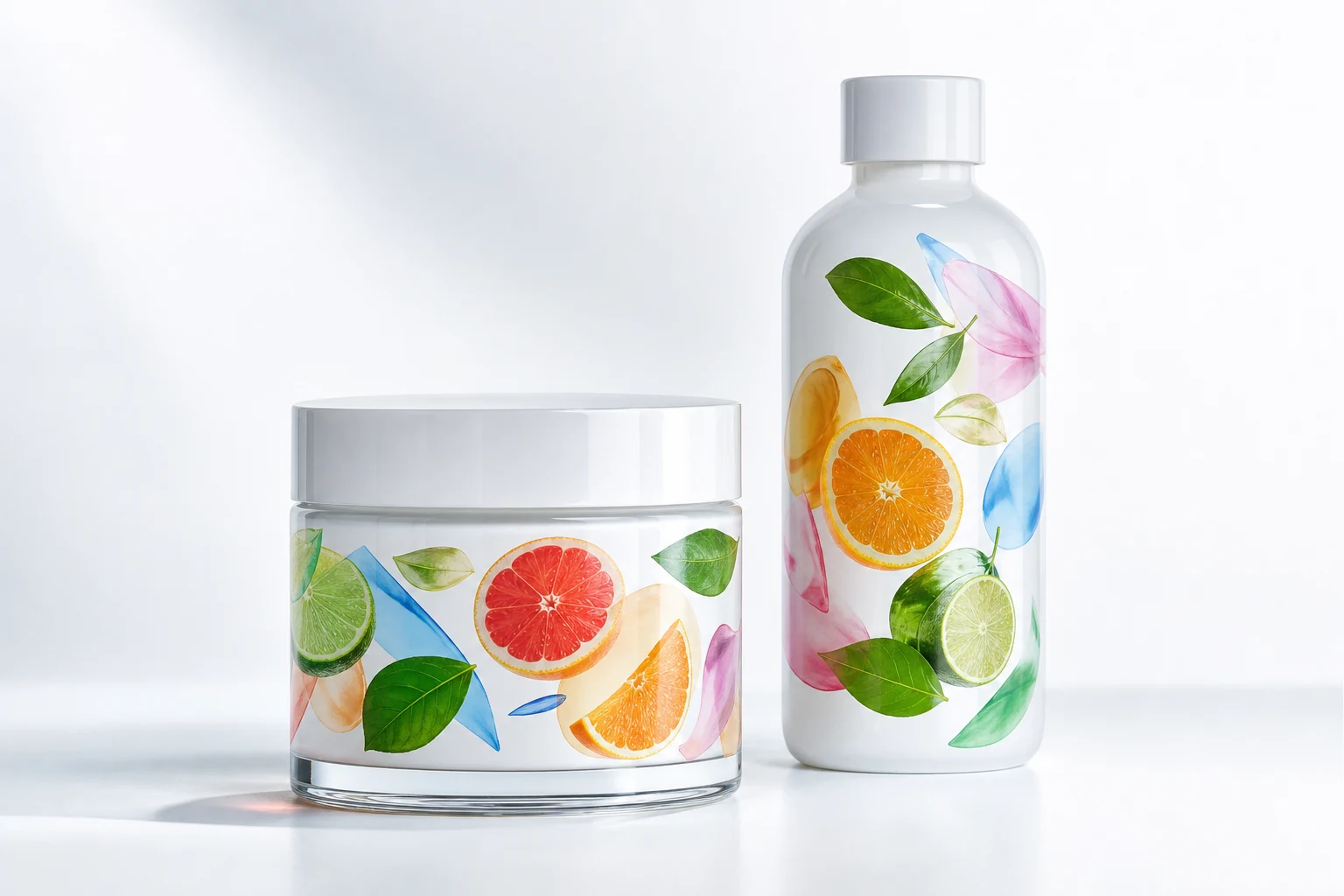
UV direct printing is best for multi-color artwork, gradients, and short design cycles, but color, white ink, adhesion, and geometric distortion must be qualified on the coated container.
UV direct-to-shape printing uses digitally controlled inkjet heads to place curable ink on a container as it is indexed or rotated. It removes the separate label material while supporting gradients, photographs, many colors, and versioned artwork.
What the print system is doing
Industrial drop-on-demand systems jet controlled droplets of pigment-based ink and cure them with UV energy. Available channels commonly include CMYK and white; some systems add colors to extend gamut or special channels for other functions.
Siegwerk describes its industrial UV inkjet series as intended for direct-to-shape applications and available with CMYK, white, and optional extended-gamut colors. That illustrates the basic channel architecture, but each production line has its own inks, heads, cure, and substrate capability. See Siegwerk SICURA Jet G4.
White ink controls the relationship with the surface
CMYK inks are generally not fully opaque. On clear glass, dark powder, metallic effects, or saturated backgrounds, their appearance depends on what sits beneath them.
White may be used as:
- A local underbase beneath color
- A visible printed color
- A selective opacity layer that fades into open coating
- A block beneath small type or a QR code
The white separation should be designed, not generated without review. A heavy full-field white underbase can make the image look like a label. Selective white lets transparent or open areas continue to reveal the package.
Curved surfaces require synchronized geometry
The print system must coordinate container rotation, head position, droplet placement, and cure. Diameter variation changes surface speed. Taper changes circumference along the vertical axis. Shoulders and compound curves alter stand-off distance and jet angle.
For that reason, the printable area is not simply the full visible body. The production template should identify the qualified cylindrical or near-cylindrical region and reserve space near seams, transitions, necks, and handling points.
Resolution is only one part of quality
A high nominal dpi does not guarantee a sharp package. Perceived quality also depends on droplet size, screening, white registration, surface smoothness, head distance, ink spread, cure, and the artwork's own resolution.
Evaluate:
- Small type and reversed details
- Smooth gradients without visible banding
- Neutral grays and shadow detail
- Registration between white and color
- Solid-area uniformity
- Edge sharpness at the wrap limit
- Color consistency around the circumference
Color management must describe the output
RGB and CMYK values are device dependent. The International Color Consortium explains that device profiles connect device values to a device-independent reference space. A monitor profile alone does not characterize the container printer, ink, coating, and viewing condition. See the ICC profile overview.
Use color-managed artwork, preserve embedded profiles, and request a physical contract sample for critical colors. Spot brand colors may require dedicated channels, adjusted builds, or an agreed closest reproduction rather than an assumed exact match.
Adhesion and cure are part of print quality
The ink must wet and bond to the cured powder or prepared substrate. Surface contamination, low surface energy, incompatible additives, or inadequate cure can cause adhesion loss. Excessive cure exposure can affect appearance or the underlying coating.
Test the complete stack after realistic conditioning. An initial tape result immediately after print does not substitute for product, abrasion, moisture, and aging tests relevant to use.
Best artwork candidates
UV direct print is particularly useful for:
- Photographic or illustrated color
- Gradients and soft transparency
- Multiple versions using a common container
- Personalized or serialized elements
- Artwork combining opaque white and translucent color
- Designs that intentionally reveal a coated background
It may be unnecessary for a one-color mark that screen print can reproduce more simply and opaquely. Choose the method around the image and production plan.