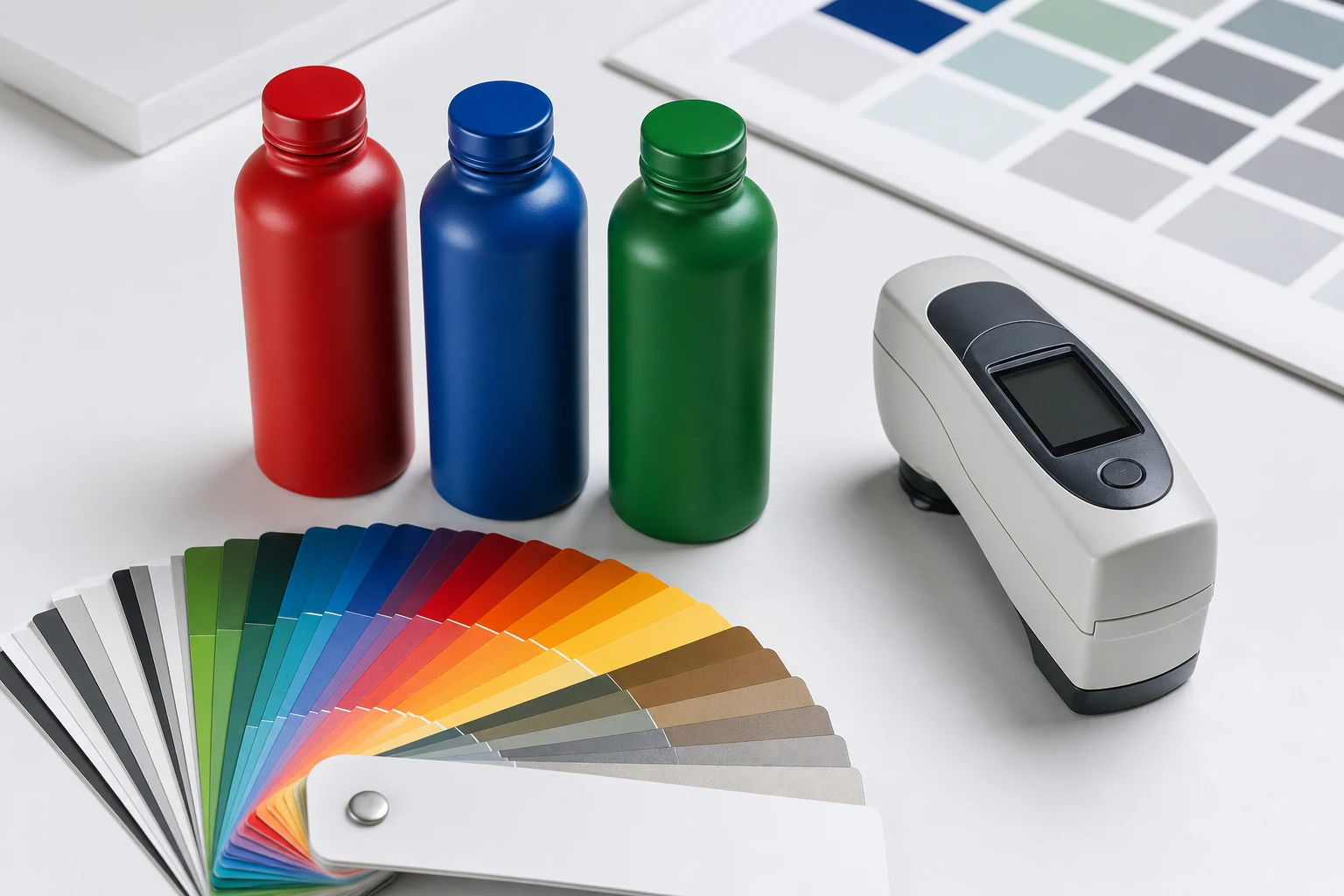
A package color changes because perceived appearance is the combined result of the coating, substrate, surface reflection, geometry, fill, and illumination rather than the pigment value alone.
Teams often approve a color under one condition and discover that it changes on shelf, in photography, or after filling. Usually the coating has not mysteriously changed. The viewing system has.
The light reaching the eye is influenced by the illumination source and the way the package reflects, scatters, or transmits that light. The International Color Consortium summarizes this relationship in its color-management FAQ.
Substrate changes the optical stack
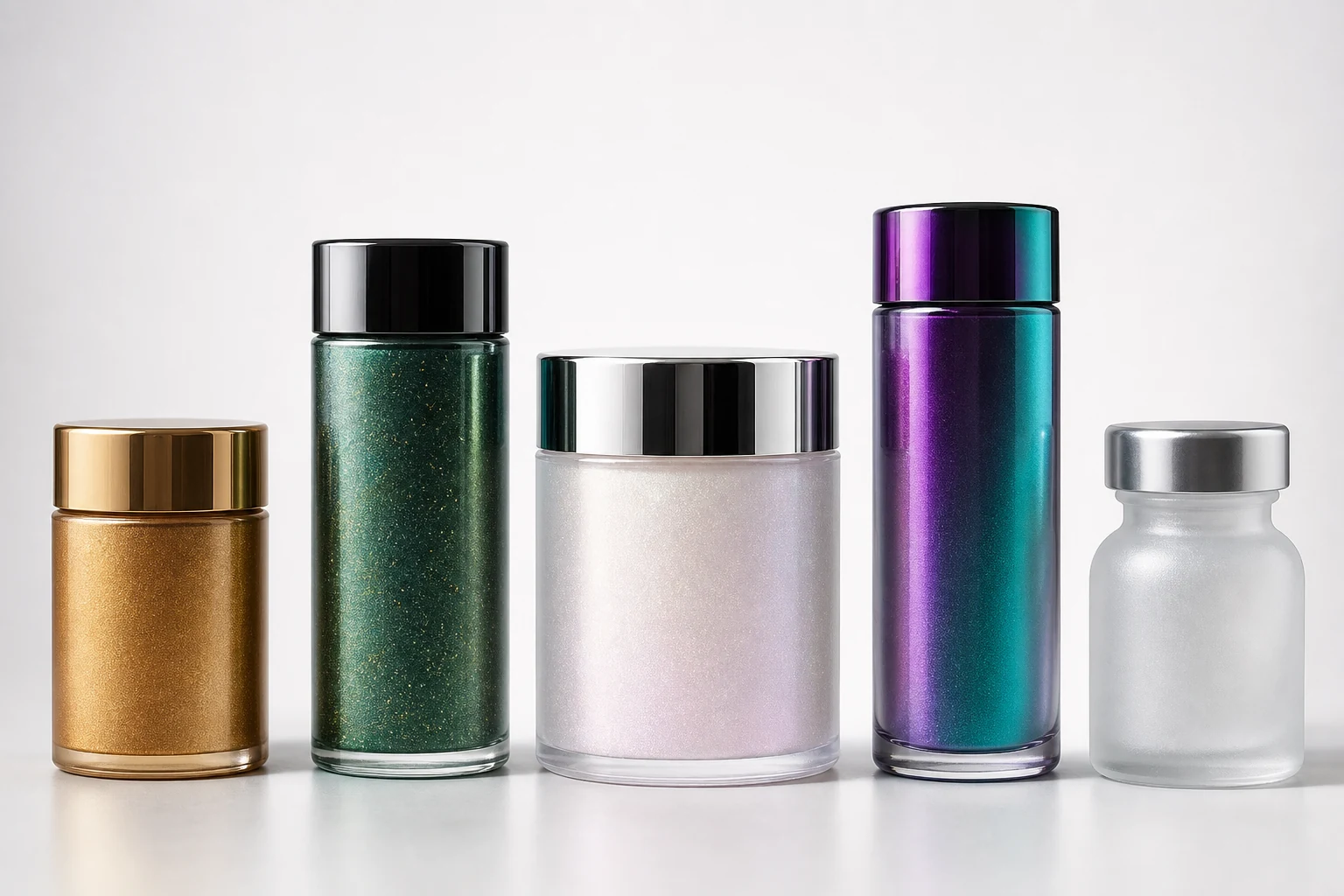
An opaque coating can largely mask the base, but film thickness and opacity still matter. Translucent frost, tinted clears, pearls, and effect finishes deliberately allow the substrate to participate.
Clear glass introduces transmission, rear-surface reflections, wall thickness, and the product behind the glass. Metal is opaque and reflective. The same effect material can therefore produce different depth and brightness on each.
Fill color matters on glass
A frost or translucent coating evaluated on an empty bottle may change substantially when the bottle contains amber oil, a white emulsion, a colored spirit, or a dark fragrance. Fill level can also create a visible boundary through the decoration.
Approve translucent glass directions in at least three states when relevant:
- Empty container
- Filled with a color-matched simulation
- Filled and viewed with the intended rear artwork or label information
Sheen changes contrast and saturation
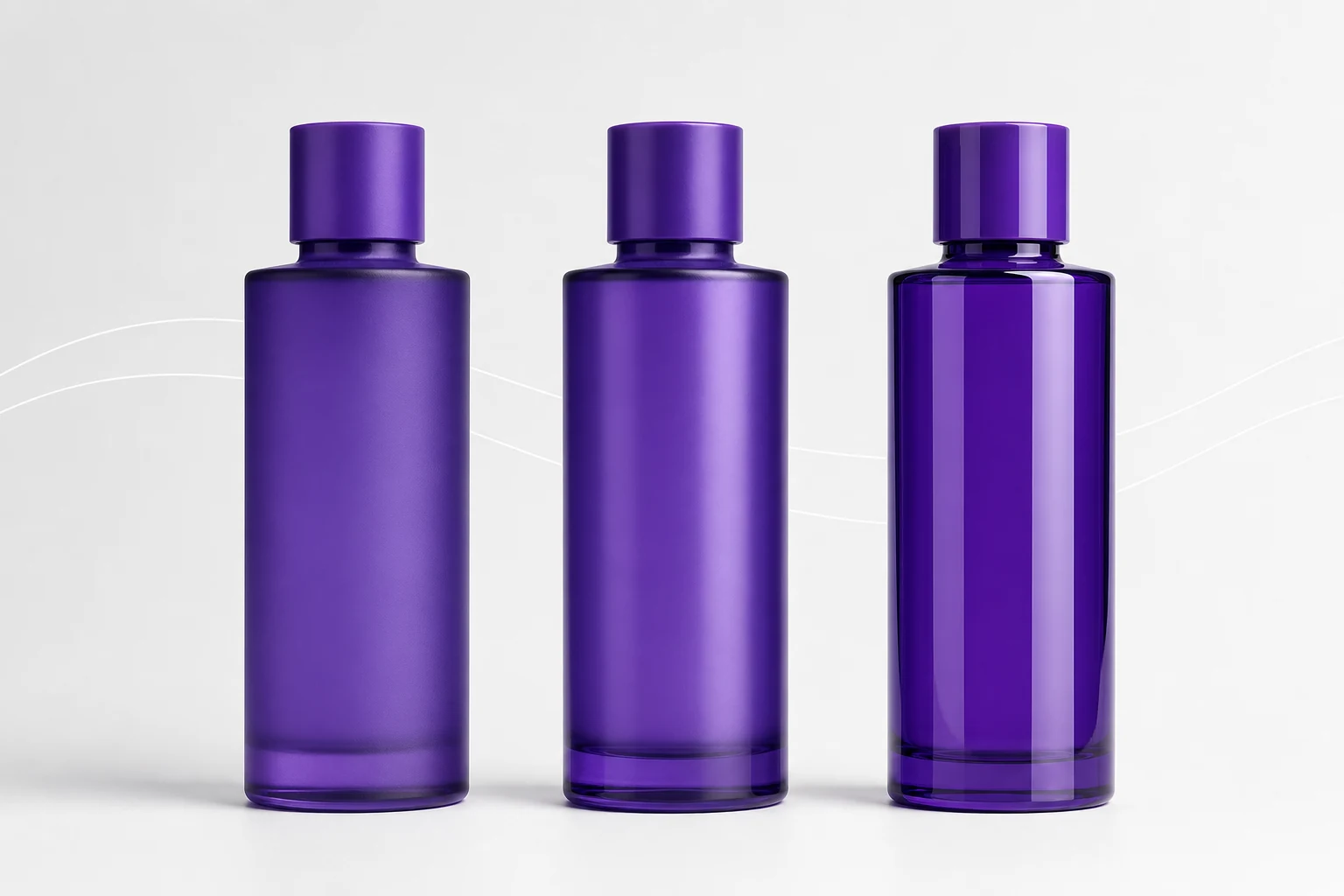
Gloss produces sharp highlights and often makes dark colors feel deeper. Matte scatters reflections and can make the same hue feel lighter or quieter. Satin preserves shape with controlled glare.
Instrumental color readings and visual judgments should therefore compare like finishes. A numerical match between flat matte and curved gloss samples may not create a visual match in use.
Lighting can cause metamerism
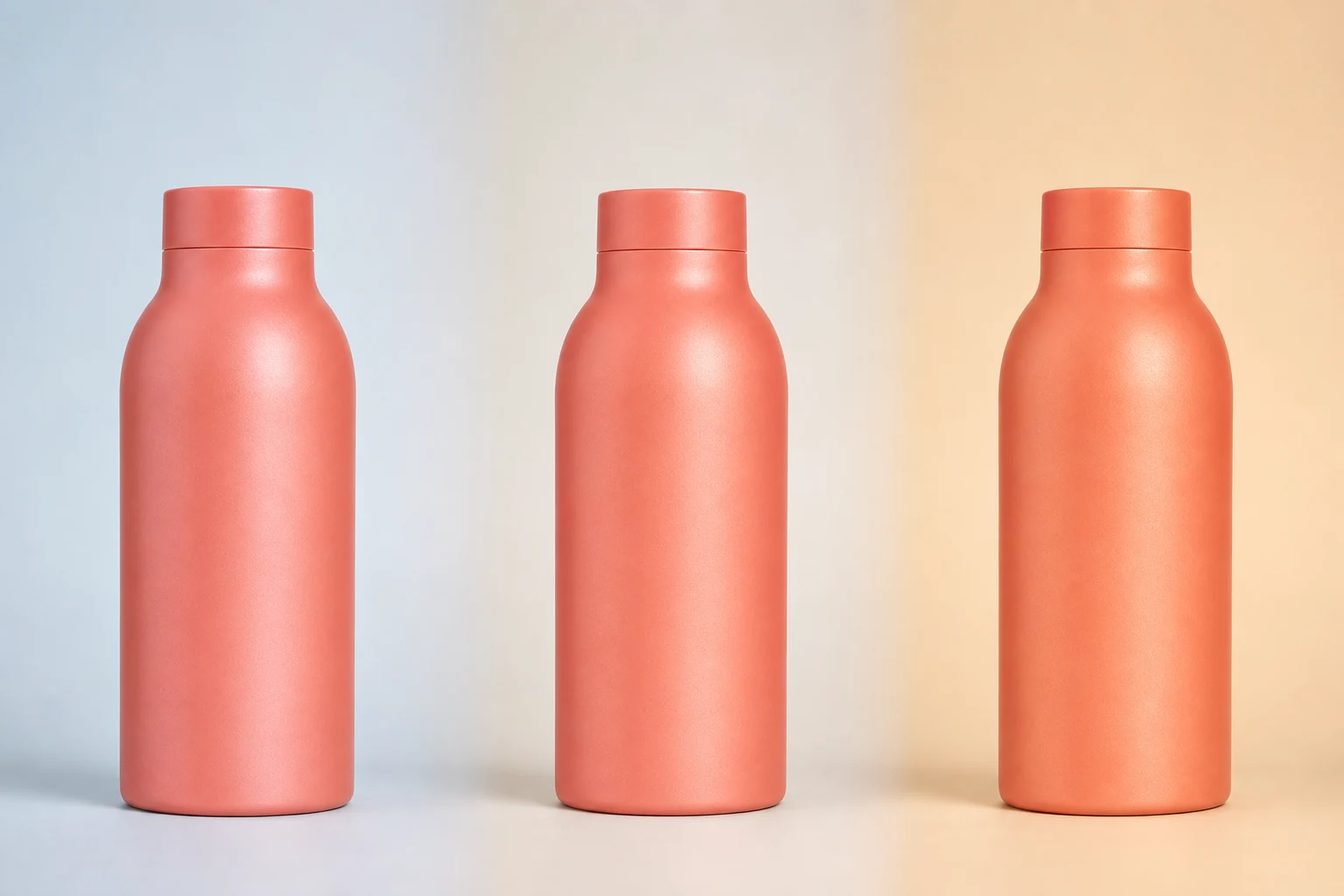
Two samples can appear similar under one illuminant and separate under another because their spectral reflectance differs. This effect is commonly called metamerism.
Evaluate important brand colors under lighting relevant to their journey: daylight-like inspection light, retail illumination, studio photography, and the typical use environment. Avoid uncontrolled office lighting as the only approval condition.
Pantone notes that measurement conditions and optical brighteners can change published RGB or hex relationships for printed guides. While bottle coatings are different from paper, the underlying lesson is the same: measurement and viewing conditions belong in the color conversation. See Pantone's measurement explanation.
Geometry makes one package show many colors at once
A curved bottle presents a range of reflection angles simultaneously. The center may show mostly body color while the edges carry bright highlights or darker reflections. Metallic and prismatic effects intensify this behavior.
For approval, rotate the container and inspect all sides. A single frontal photograph is insufficient for angle-dependent finishes.
| Variable | Typical visual consequence | Control action |
|---|---|---|
| Glass vs metal | Different reflection, opacity, and depth | Sample on the production substrate |
| Empty vs filled glass | Changed transmitted color and contrast | Review with representative fill |
| Matte vs gloss | Changed highlight and perceived saturation | Approve color and sheen together |
| Daylight vs retail light | Possible hue or match change | Use defined viewing conditions |
| Flat chip vs curved bottle | Different highlight geometry | Approve the final container |
A better color approval room
Use neutral surroundings, clean current standards, controlled illumination, and consistent sample orientation. Allow observers to adapt to the light. Do not place a highly colored object immediately beside the comparison area.
Record:
- Illuminant or viewing booth setting
- Sample orientation and background
- Empty or filled state
- Coating and finish
- Physical master identification
- Instrument, geometry, and formula if measurements are used
- Visual acceptance decision and approvers